When I first joined the wine blogging community back in 2016, I took note of the bottles recommended by other writers. As you’ve probably realized, we’re not shy about sharing our opinions on regions, grape varieties, and wineries. So, when I read multiple glowing reviews of the wines from Smith-Madrone, I paid attention. Especially to the raves about their Riesling.
Not long afterward I was offered samples to taste for myself and discovered what all the fuss was about. Now I’m an avid member of their fan club and love to introduce others to these wines. But, until recently, I’d never made it out to Napa to visit the property in person. That changed in August, when my sister and I spent a few days in wine country.
Smith-Madrone was the first appointment I made . . .
The Vineyards
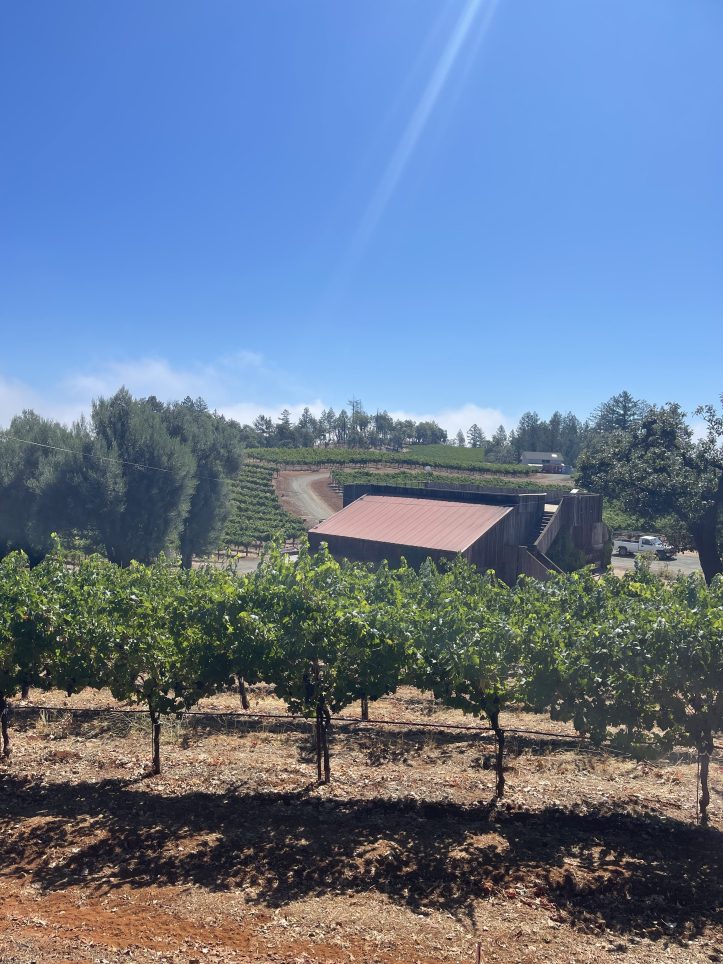
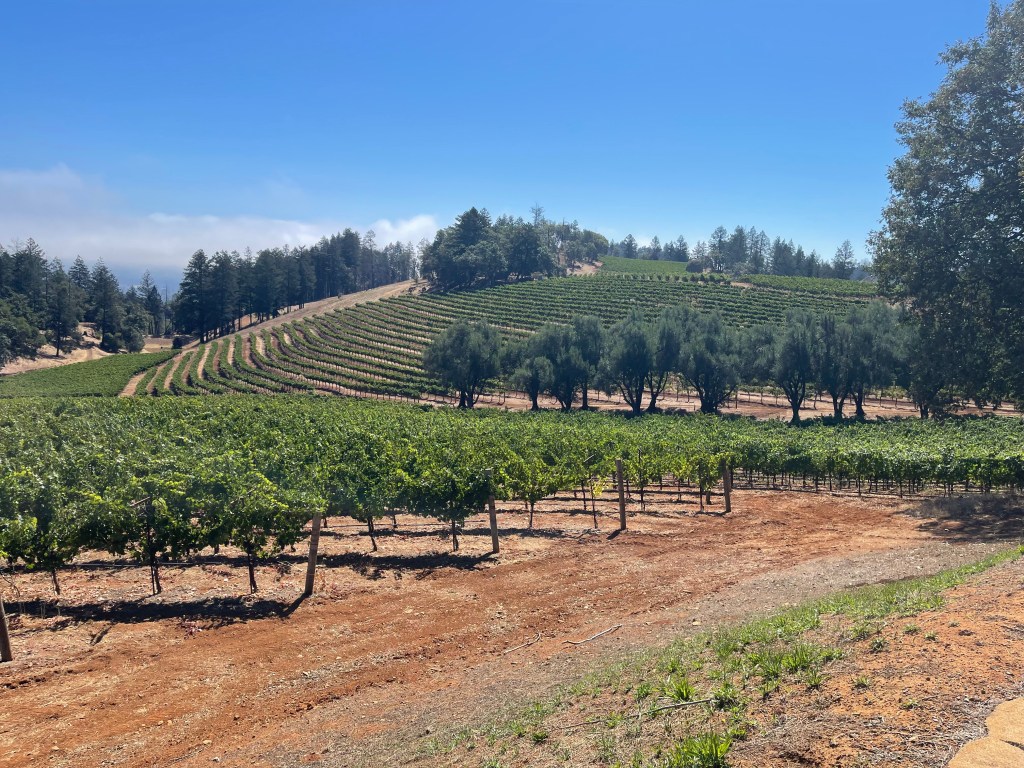
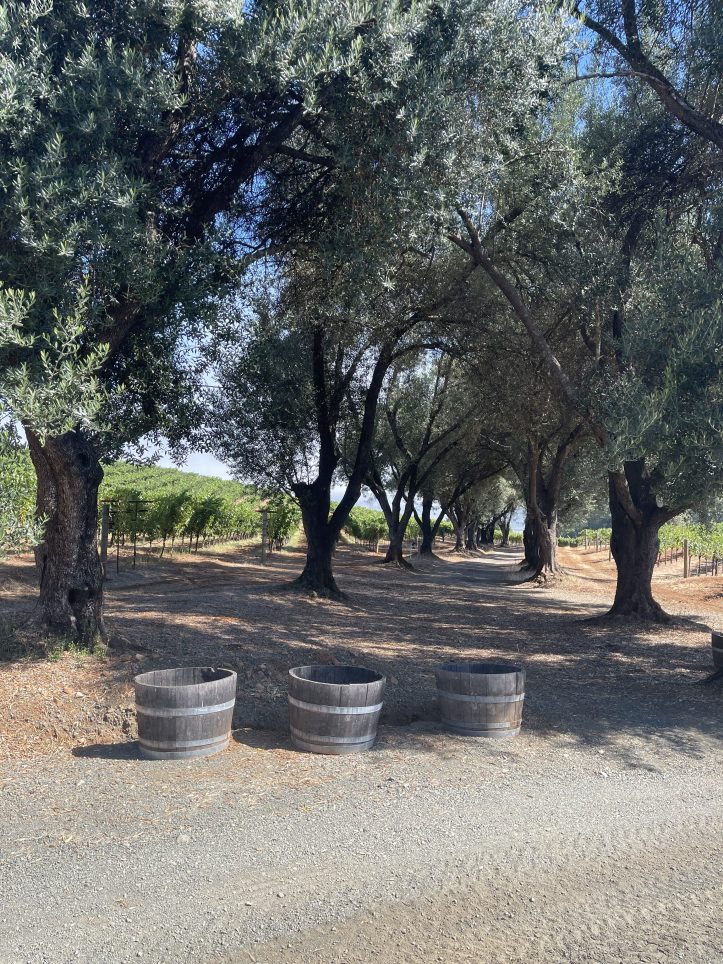
Smith-Madrone was founded in 1971 by brothers Stuart and Charles Smith. The estate boasts 200 acres, 34 of which are devoted to grape growing. All wines are the product of dry-farmed estate vineyards perched atop Spring Mountain. Stu matched each variety with plots specifically suited to them: eastern exposures and morning sunshine for Riesling; southern and western exposures on the flats for Cabernet Sauvignon; the coolest, north-facing slopes for Chardonnay. Vineyards grow next to 120-year-old picholine olive trees and the famous Madrone evergreens, with their unique red-brown trunks and branches.
My First Glimpse of the Property
Beautiful vistas rewarded our circuitous – and at times dizzying – ride up Spring Mountain. The route from valley floor to the summit is not for the faint of heart, especially if you’re prone to carsickness. My advice: get an experienced driver to shuttle your group to and from the winery, especially if you plan to visit more than one property. Our Saturday morning trek was a breeze, thanks to Alvaro, who drives a comfortable SUV and knows the twisty roads between Sonoma and Napa like the back of his hand. He’s also got lots of stories about growing up in wine country and the joys of being a girl-dad. (Hit me up if you’d like his contact info.)
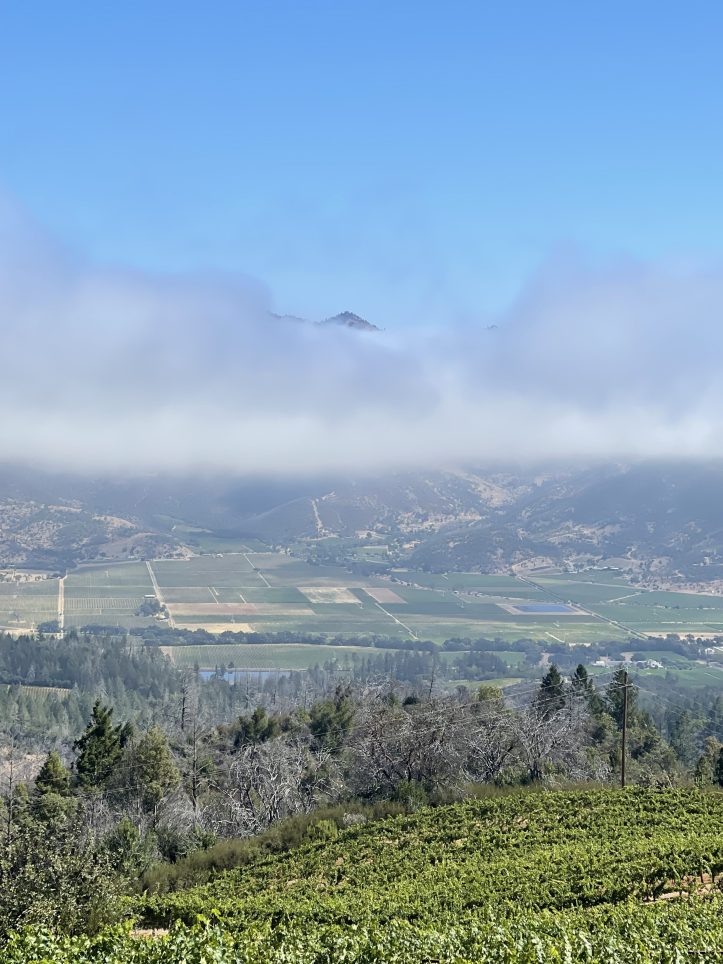
We were the first of our tasting group to arrive and took advantage of a few extra minutes to admire the dramatic panorama in front of us. As a wine geek, I was excited to see firsthand the meteorological phenomenon known locally as the marine layer: misty clouds of morning fog that settle over the valley, moderating morning temperatures during the growing season. It casts an otherworldly spell over the valley that’s both enchanting and a bit eerie. By midday the sun had burned most of the vapor away, exposing magnificent views for miles in all directions.
Small wonder that Charlie and Stu fell in love with this place 50 years ago . . .
Winemaking Philosophy
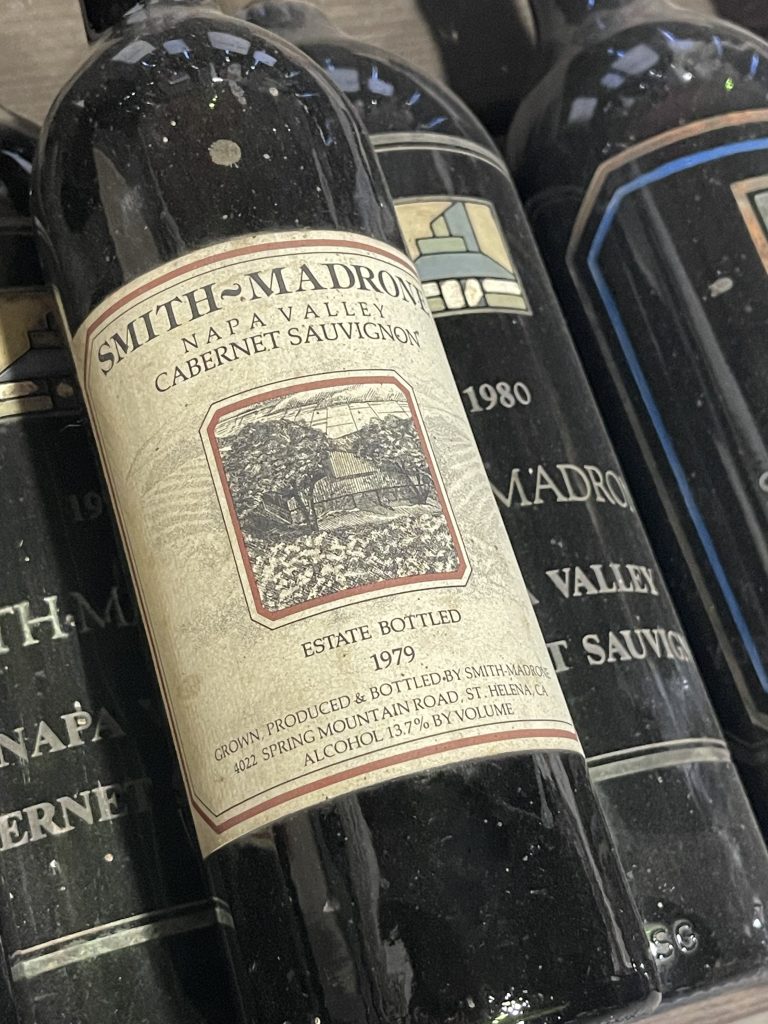
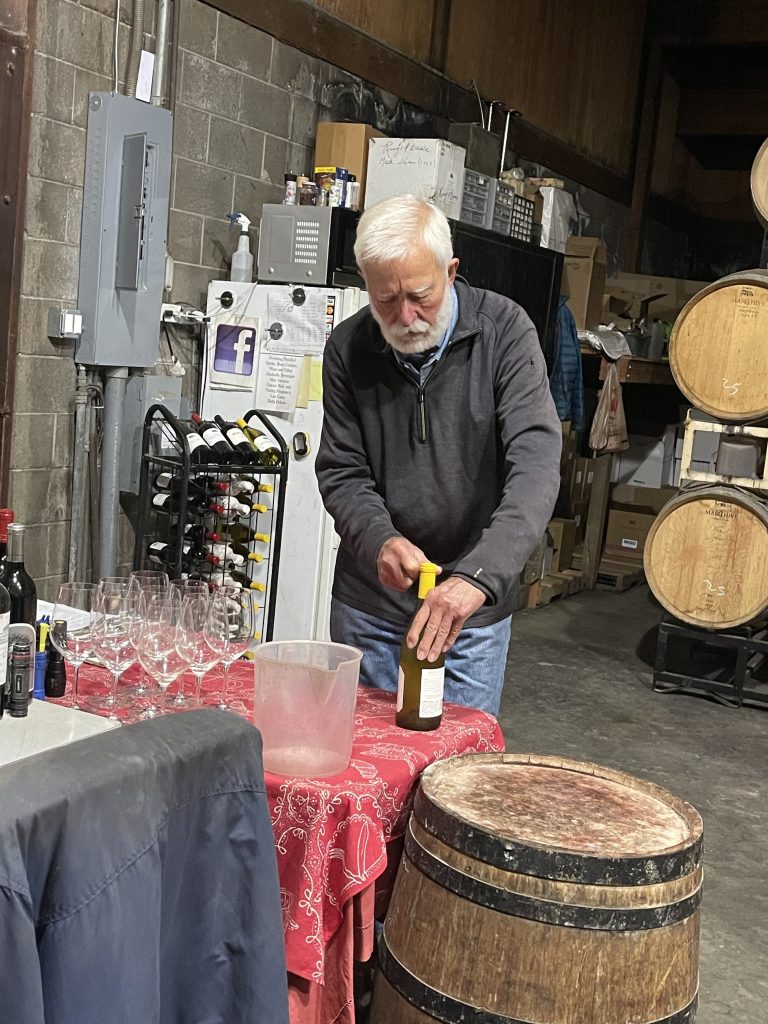
Winemaking is the province of Charlie Smith and François Bugué. From the first vintage, winemaking practices have blended traditional, old-world methods with new techniques developed in California. Barrel and open-top fermentations, and extended sûr-lie aging are labor-intensive techniques but essential to producing high-quality wines. Less than 4,000 cases of wine are released each year, which is comparable to European estates of similar size and reputation.
The Tasting
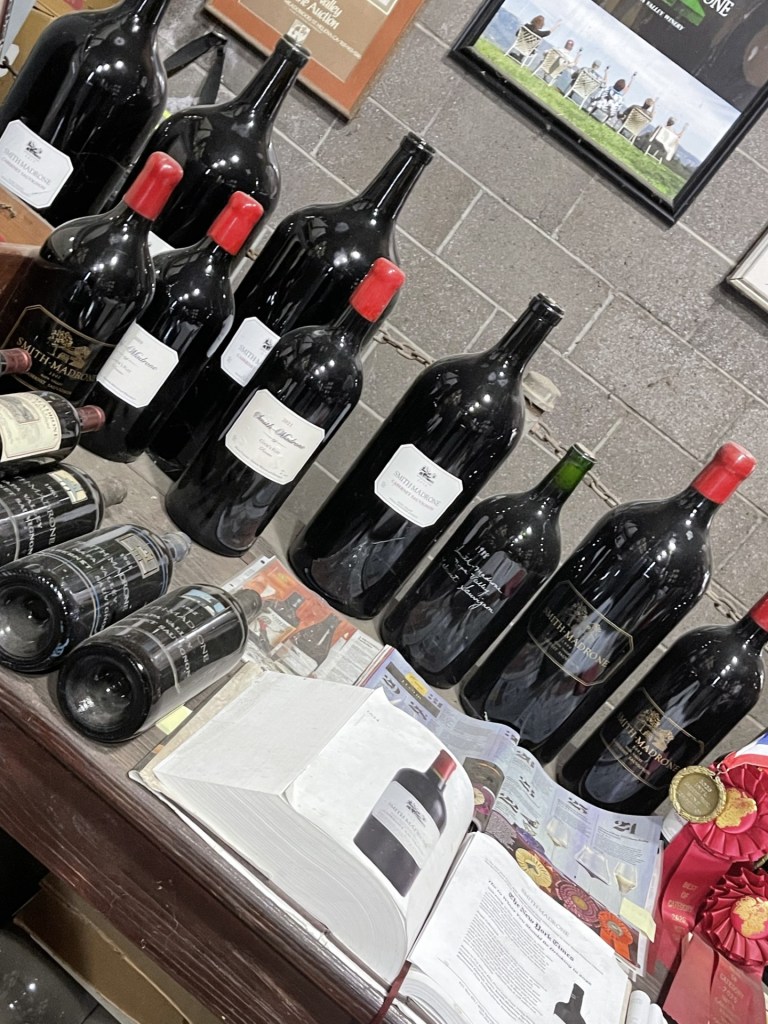
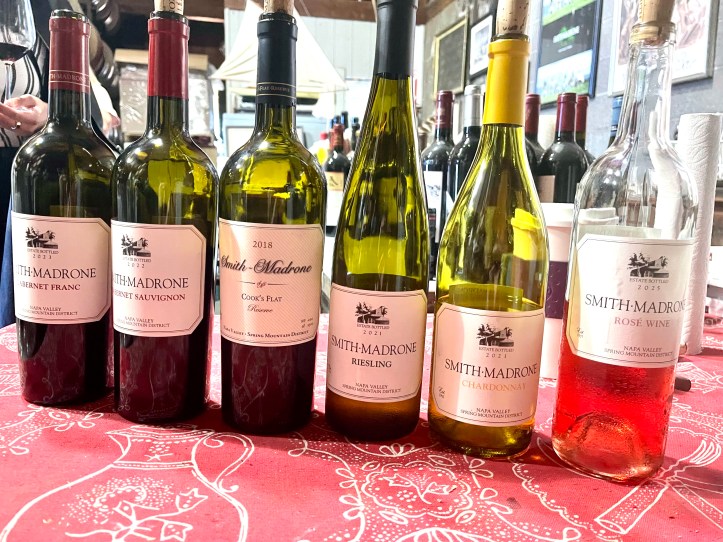
2025 Smith-Madrone Napa Valley Rosé ($30; 14.1% abv)
A blend of 50% Merlot and 50% Cabernet Franc cold-fermented in stainless steel tanks. Bright cherry-red in color with fresh, vibrant notes of red fruit (currant, raspberry, cherry, rhubarb) accented by lovely floral aromas of violet, and a slight peppery note. On the palate it was quite complex, with all the ripe, tangy fruit of the nose plus a wisp of tannic structure on the finish. This might be the ultimate picnic wine; or the ultimate pick-me-up wine in the doldrums of winter. Note to self: sock a few bottles of this wine away to get through February in New York City!
2021 Smith-Madrone Napa Valley Chardonnay ($45; 14% abv)
100% Chardonnay barrel-fermented and aged for 10 months in 50% new French oak.
Bright lemon color with complex aromas of ripe white peach/nectarine, yellow apple and pear, citrus rind and a hint of vanilla cream. It zips across the palate with ample acidity, more prominent citrus notes, and an appealing homage to baked apple pie. I refer to this wine as the prototypical “Goldilocks” Chardonnay: it’s ripe but not too ripe, with just a whisper of oak influence. The epitome of balance and elegance, this is one of my favorite Chardonnays, year after year.
2021 Smith-Madrone Napa Valley Riesling ($40; 13.2% abv)
A bit of an outlier in Napa, Riesling more often calls to mind the steep slopes of the Mosel in Germany or perhaps the sun-warmed slopes of Alsace in France. This wine has similarities to both and makes me wish Riesling were more prominent in Napa Valley – and that it all could be made by Smith-Madrone.
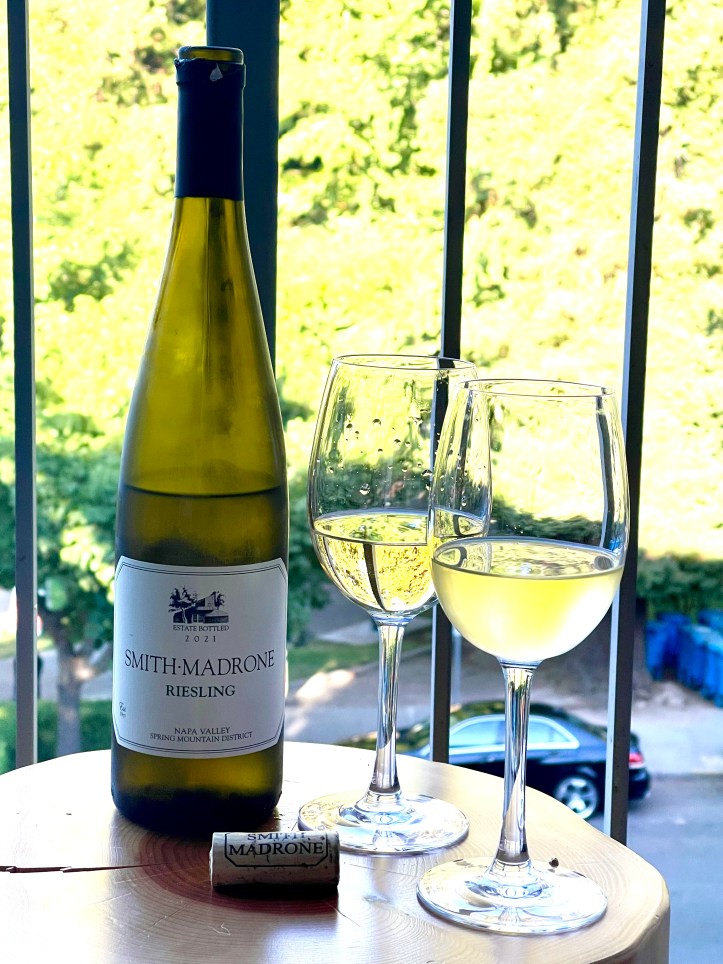
100% Riesling, this wine is a pale lemon color, almost clear at the rim. Enticing aromas of stone fruit (peach, apricot), citrus, heightened by a lovely note of fresh basil. The palate is a mélange of citrus fruit (lime, orange) complemented by flavors of tart green apple, grilled pineapple, and apricot. And then there’s the slate-mineral component that serves as the organizing principle. Vibrant acidity balances the ripe fruit making this wine a brilliant pairing with a wide array of dishes. Or all by itself, just because it’s Sunday night and you’re treating yourself. Hey, I’m not gonna judge . . .
2022 Smith-Madrone Napa Valley Cabernet Sauvignon ($70; 14.2% abv)
Deep ruby in color, this wine is a blend of 81.5% Cabernet Sauvignon and 18.5% Cabernet Franc. Intense aromas of cassis, black plum, rosemary, thyme, and violet on the nose, all of which are mirrored on the palate. Acidity is higher than I expected given the ripeness of the nose – a pleasant surprise I wish I encountered more often in Napa red wines. Smoothly integrated black-tea tannins give the wine a velvety texture; there are prominent berry and earthy notes on the long finish. Delicious now but will continue to develop over the next 10 years. Try to stash a few bottles away, if you have that much self-restraint.
2023 Smith-Madrone Napa Valley Cabernet Franc ($85; 14.3% abv)
This was my first time tasting the Cabernet Franc, and it was a stunner! A blend of Cabernet Franc (90%) with a little Cabernet Sauvignon (10%) this wine spent 18 months in 60% new French oak. Deep ruby, almost purple in color, there are pronounced aromas of red and black raspberry, blackberry, and a hint of fresh bay leaves. There are also notes of tobacco and baking spice. On the palate it’s just as complex, with all the spicy, ripe character of the nose. Grippy tannins and tart acidity provide structural balance and bode well for the future. While stunning today, this wine will reward the patient wine lover who can set it aside for a few years.
2018 Smith-Madrone Cook’s Flat Reserve ($225; 14.2% abv)
Each bottle of Cook’s Flat Reserve pays tribute to James Cook, the original owner of what is now the Smith-Madrone property, and planter of the first grapevines. In 1884, President Chester A. Arthur signed the official land grant, a copy of which is stamped on the tissue paper used to wrap each bottle of Cook’s Flat Reserve. The original document, bearing the official stamp of the U.S. Land Office, hangs in the winery to this day.
A blend of 87% Cabernet Sauvignon and 13% Cabernet Franc; aged for 20 months in 100% new French oak. Deep ruby-purple in the glass, with enticing floral aromas (violet, rose, cherry blossom), black fruit (luxardo cherries, plum, cassis), and spicy black pepper notes. There is also an intriguing savory, umami note. The palate is rich and textured, with ripe black fruit as on the nose, lively acidity, and silky-smooth tannins. It is so well-balanced and enjoyable now – I can only imagine how delicious it will be after a few years in the cellar. What a beauty!
At the End of the Day . . .
If you’ve long admired the wines of Smith-Madrone but haven’t visited in person, I strongly urge you to change that. And, if you’re curious about the wines but have yet to taste them, I highly recommend scheduling an in-person tasting next time you’re in town.
There was something special about walking the property with Charlie, hearing how he and Stu built the winery and planted the vineyards together 50 years ago. Walking past the centenarian olive trees and the stately Madrone evergreens that have graced the property for ages. Appreciating the quiet power of this paradise at the peak of Spring Mountain. And connecting all of it to what’s in each bottle.
Now that I’ve seen where these wines come from, heard their origin story, and crunched the vineyard soil under my feet, I love them all the more.
I’ll be back soon, I promise!

