Sunday brings the grand finale of Giro 2026, and it will be a day of celebration and camaraderie for everyone but the sprinters. Jonas Vingegaard and his Visma-Lease a Bike teammates will sip Italian bubbles and take group photos along the way, as will the rest of the category winners. Giulio Ciccone, adorned in blue, will toast to his King of the Mountains victory while Afonso Eulálio with his megawatt smile, will celebrate winning the white jersey for best young rider (and endearing himself to cycling fans worldwide.)
Those vying for the maglia ciclamino (aka the points jersey) will have to postpone any such festivities: they’ll be racing for the final stage win. Grand tour races are notoriously stingy in awarding prizes to the fast men. But the final day usually culminates in a thrilling sprint finish, whether it’s over the cobbles on the Champs-Elysées in Paris or on the narrow streets of central Rome.
The sentimental favorite has to be Jonathan Milan, an Italian rider who has fallen short in the few sprint opportunities thus far. He lags 92 points behind leader Paul Magnier, which means the jersey is probably out of reach for him. A stage victory, on the other hand, is very possible. I’ll be on the edge of my seat watching the final few kilometers . . .
Here’s a recap of what happened on Stage 20 – it was nonstop action from start to finish:
Stage 21: 131 kms; a flat route that loops around central Rome, west to Ostia on the coast, and back into town. No profile map today, none needed. 😊
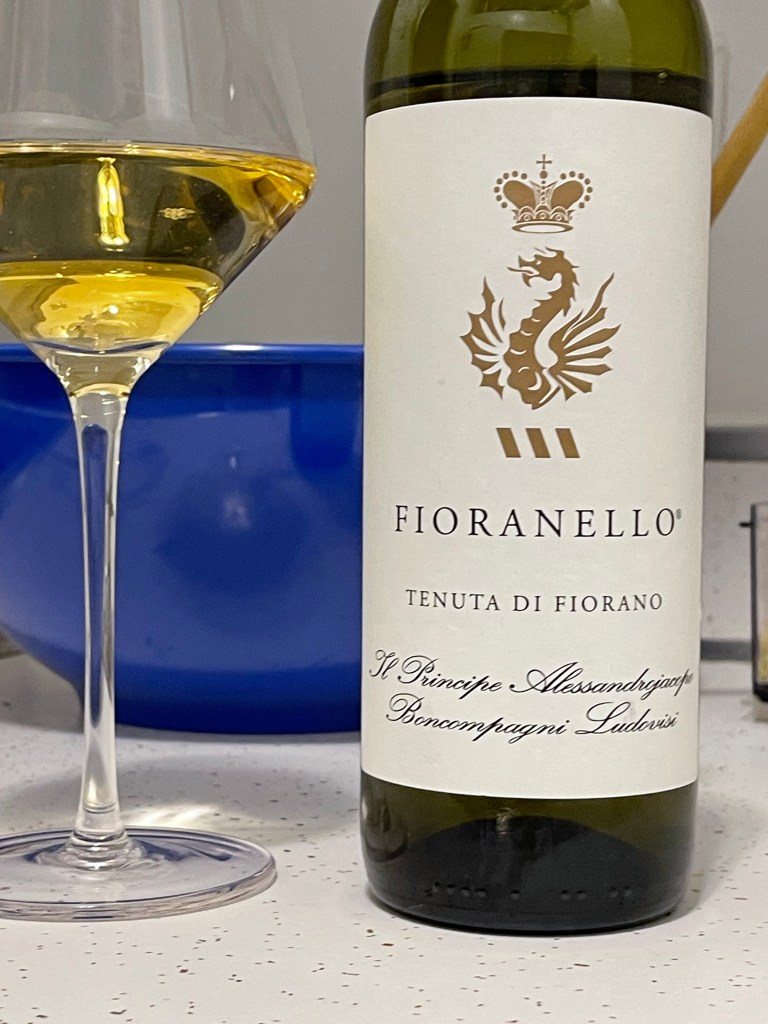
Wine Recommendation: 2023 Tenuta di Fiorano Fioranello Lazio Bianco ($29; 14% abv)
Tenuta di Fiorano lies just south of Rome, high in the Alban Hills. The composition of the soil at Tenuta di Fiorano is volcanic, thanks to the looming presence of the nearby Latium Volcano. Vineyards face southwest/northeast, which exposes them to consistent sunlight throughout the day. The hillside plots also benefit from ocean breezes blowing off the Tyrrhenian Sea, which cools them in summer and minimizes disease pressure during the growing season. That’s helpful, as the estate has embraced organic viticulture since the 1940s.
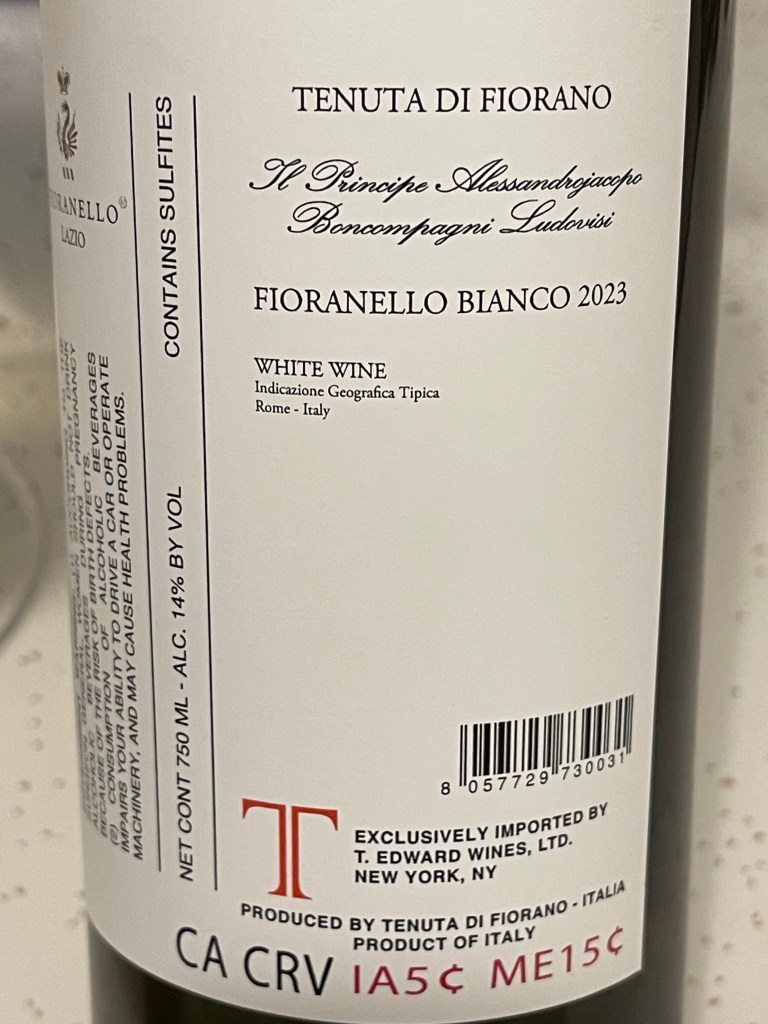
This wine is a blend of Grechetto and Viognier but I don’t have info on the exact proportions of each. After fermentation, it aged on its lees in 10-hectoliter oak and chestnut barrels.
Tasting Notes and Pairing
Bright lemon color. The nose is intense, marked by aromas of ripe pear and peach and bright citrus fruit. White flowers, fresh hay, and a little buttery sweetness; lightly toasted white bread. As it opens, a distinct honeyed note emerges, along with an earthy spice.
The palate is unctuous and weighty. While it isn’t sweet, I was reminded of the canned peaches my mom used to make every summer: tangy, syrupy, and a hint of sugar. Rather low in acidity, this wine is full-bodied in the fashion of white wines from the Northern Rhône Valley. It would be lovely with mild blue cheese or something buttery, like sole amandine.
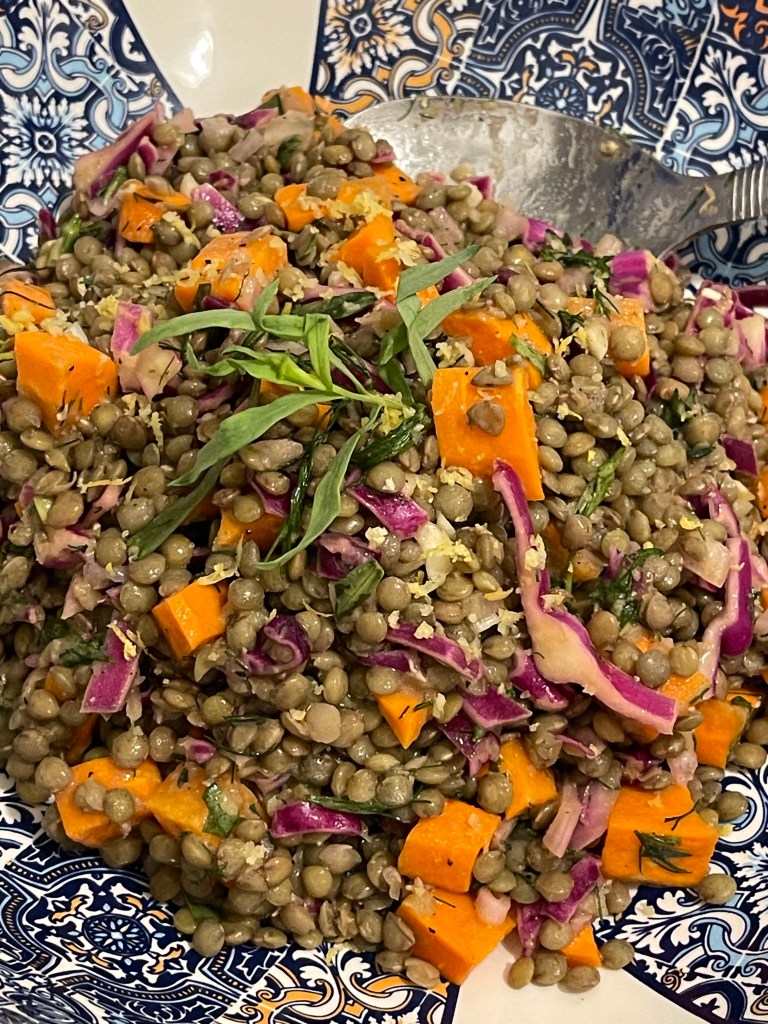
The earthy notes in the wine helped it match well with a French-style green lentil salad. And the honeyed character worked well with the dressing, which was a citrus and honey mix. All in all, a pleasantly surprising wine; one that added some richness and spice to my weeknight dinner.
Well, that’s a wrap from Giro 2026. I hope you’ve enjoyed the ride and maybe found a few new Italian wines to try. The Tour de France kicks off July 4th and I’ll be back with a slate of French wines to sip as you watch the drama (available on Peacock.)
Grazie et à bientôt!

