Wednesday’s race brought a softening of Visma-Lease a Bike’s iron grip on the peloton – at least for one day. A breakaway group of riders formed early and made it to the finish without incident. On the whole, it was a relatively relaxed day: Team Lidl-Trek’s Simone Consorni even stopped at the side of the road to greet his family and take on a few snacks!
Perhaps the most excitement came in the competition for the maglia ciclamino, awarded to the rider with the most sprint points. Paul Magnier and Jhonatan Narvaez have been trading the jersey back and forth, with the latter prevailing today. This battle will go all the way to Rome . . .
Here’s a recap of the highlights:
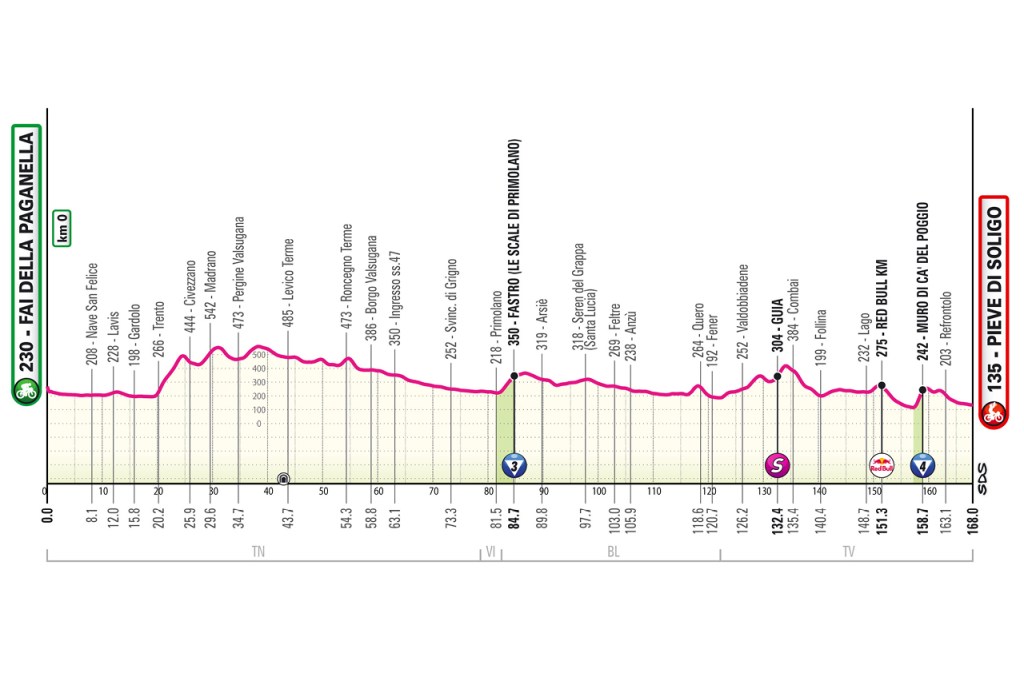
Stage 18: Fai della Paganella to Pieve di Soligo; 168 km; hilly; 2 categorized climbs
The race begins in the Julian Alps, so expect dramatically beautiful landscapes along the way. About midway through, the peloton pedals through the town of Valdobbiadene which, if you’re a fan of well-made Prosecco, should excite you.
As for the riders, it should be a medium-effort day, one that may favor the breakaway. Jonas has his eye on Friday’s monster stage, so I think he and the Vizma team will “relax” a little, keeping their legs fresh for what’s to come.
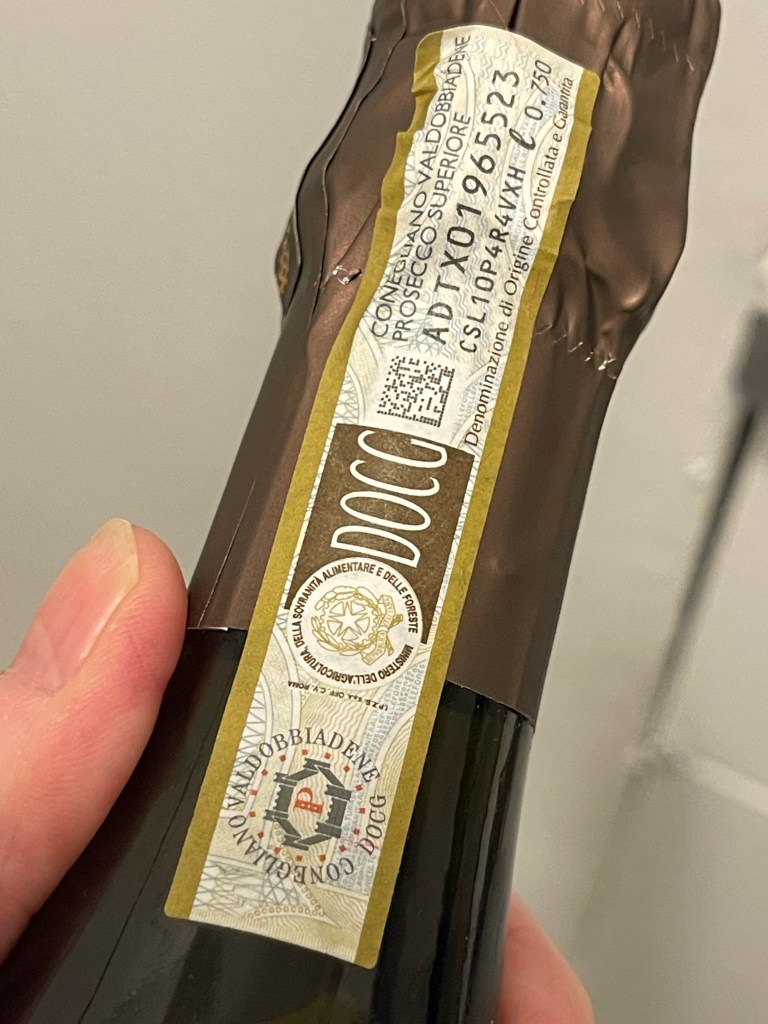
About Prosecco Conegliano Valdobbiadene Superiore DOCG
What’s the difference between a wine labelled DOC versus one that’s DOCG?
When you add a G (for garantita) to the denominazione, you take a step up in quality: grapes must be grown on the hillsides between the towns of Conegliano and Valdobbiadene, in the original Prosecco production zone. Comprising fewer than 15,000 acres in 15 communes, vineyard sites lie at higher altitude, with a southerly aspect, allowing grapes to ripen slowly and completely. Yields are lower than in the DOC, but still relatively high compared to other DOCG regions. Nevertheless, many producers apply stricter production standards than those dictated by the regulations, making high-quality Prosecco that punches way above its weight (and price tag.)
All wines must be at least 85% Glera (although many make 100% varietal wines) and the balance can come from international varieties or local grapes.
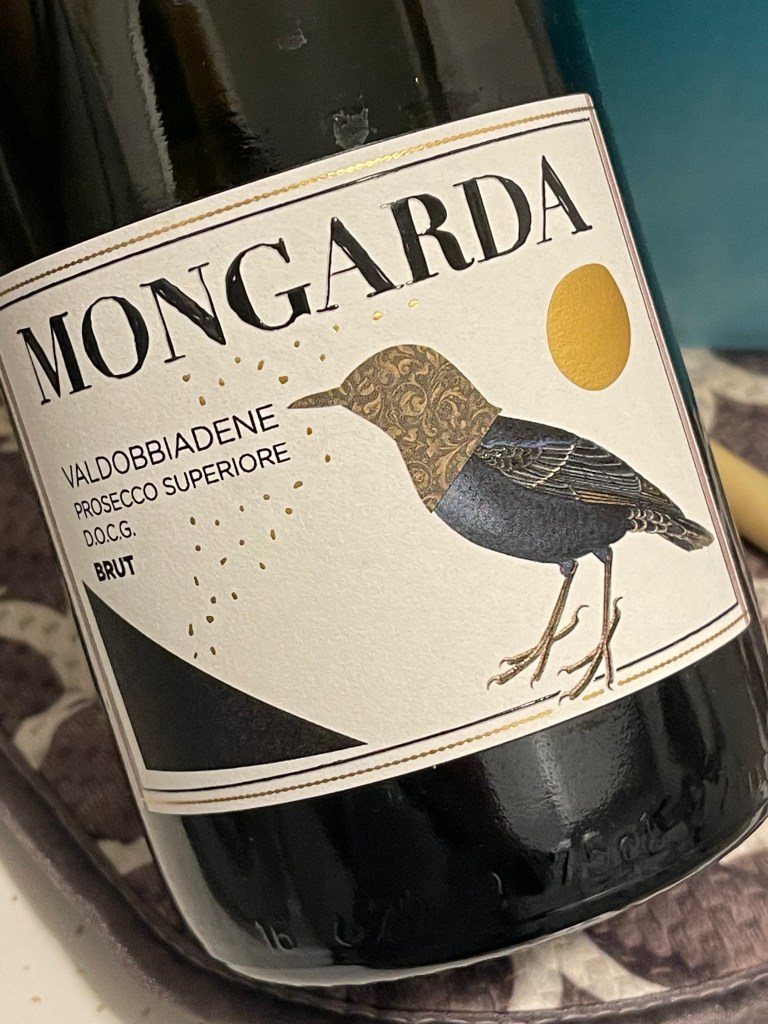
Wine Recommendation: 2024 Mongarda Valdobbiadene Prosecco Superiore DOCG ($21; 11.5% abv)
This wine was a delight! We had a few unseasonably hot days (90+ degrees) several weeks ago, and all I wanted to drink was sparkling wine. A knowledgeable salesman at my local shop tipped me off to the Mongarda which, he advised, was a great bargain. I’m proud to say that I claimed the last bottle! (Also a little sad about that . . .)
Tasting Notes and Pairing
Pale lemon color, with bright citrus aromas (orange, lemon, lime) with some ripe green apple and pear notes. A little white flower and sweet basil after it had opened a while. On the plate, it was super-clean and fresh. Flavors reflected the orchard and citrus fruit of the nose. Medium-bodied with high acidity and a lingering note of fresh orange peel on the finish. A crowd-pleaser for sure, the Mongarda will be a hit at your next summer party. Or just buy some for yourself – I won’t tell!
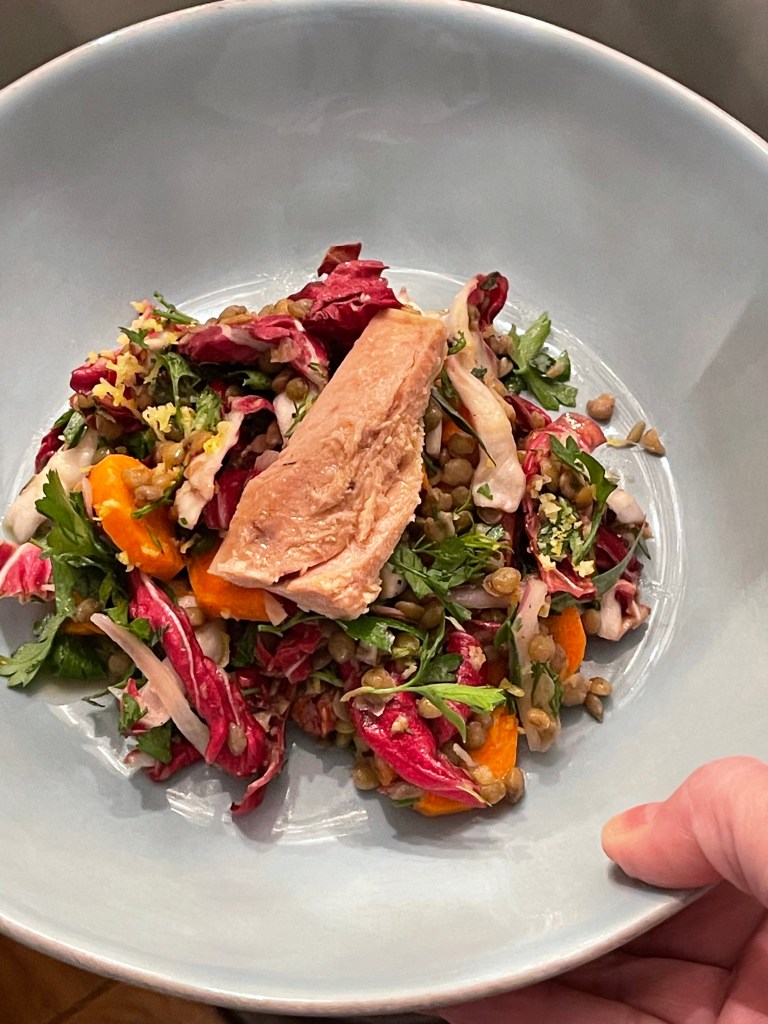
I paired this wine with a new summer recipe: a green lentil salad with carrots, purple cabbage, fresh tarragon, and a honey-citrus vinaigrette. Topped it with a chunk of good tuna in olive oil. I felt like I was on a fancy picnic!
About Mongarda
The Mongarda story began in 1978, when Bruno Tormena dedicate himself full-time to winegrowing. He comes by it honestly, having worked with his grandfather in the family’s vineyards as a teenager. In similar fashion, Bruno later initiated his son Martino into the business, and he has run the estate since 2011.
The Mongarda estate includes 5 hectares of woods and 12.5 hectares of vines, spread among the villages of Col San Martino, Farra di Soligo, Miane, and Valdobbiadene – the heart of the Valdobbiadene-Conegliano Prosecco Superiore zone. The vineyards, comprised of old vines (some planted in 1950) on rocky soil, lie on extremely steep slopes, requiring that they be worked manually.
Viticulture is done according to organic principles: no weedkillers or synthetic fertilizers are used. Instead, the Tormenas use a homemade, biodynamic compost of grape skins, vine cuttings, and manure from grass-fed cows. Natural extracts from stinging nettles and horsetail are also applied when necessary.
Enjoy Thursday’s jaunt through Prosecco DOCG country (don’t forget that G!) I’ll be back tomorrow with a preview of Stage 19 and its multiple, monstrous climbs. And with a new wine for you to try!

