But first, a recap of the individual time trial on Tuesday:
I was thrilled to see Filippo Ganna (Team Netcompany – INEOS) win the stage! He’s usually working for his GC teammates, either blazing ahead of the peloton at a pace few can follow or chasing down any riders with such aspirations of their own. Today was his chance to revel in the glory of a stage win. Thymen Arensman, his compatriot, finished in second place. Well done!
Overall, Afonso Eulalio retained the Maglia Rosa, although Jonas Vingegaard cut his lead to just 27 seconds. The favorite to win it all, Vingegaard and his crew from Vizma-Lease-a-Bike will likely eliminate that deficit on Wednesday’s stage.
Speaking of which . . .
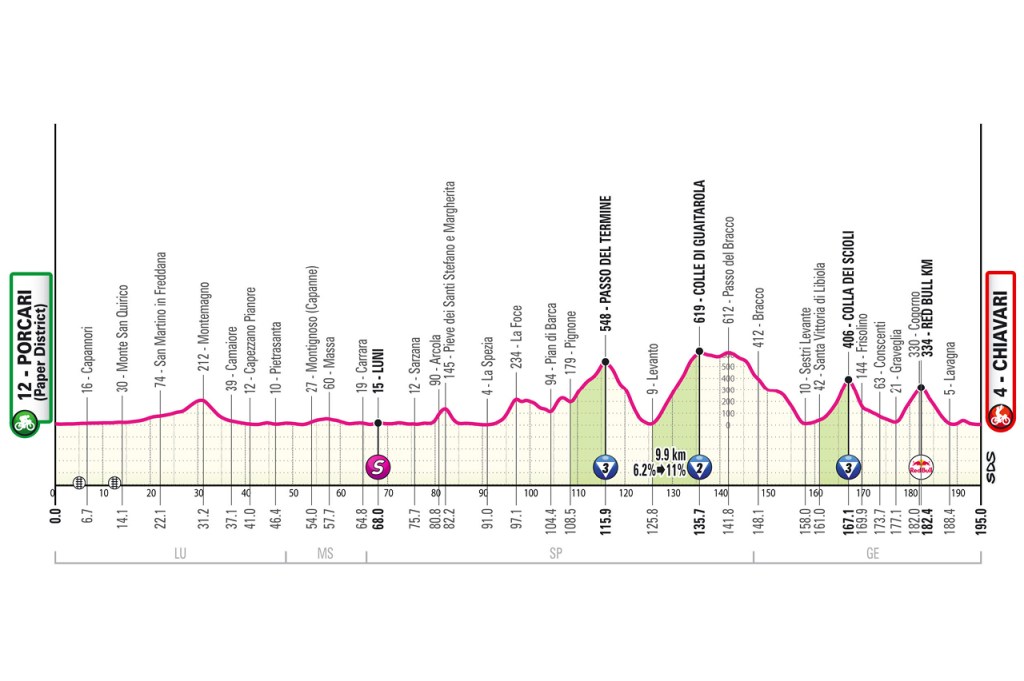
Stage 11 takes us from Porcari to Chiavari, a 195-kilometer jaunt north along the coast. It’ll be a bumpy ride, with three categorized climbs along the way. With things tightening up in the GC competition, I think Vizma will take charge of the race, keeping careful watch over anyone who attempts to form a breakaway.
Wine Recommendation: 2021 Daniele Coutandin Ramìe ($42; 14% abv)
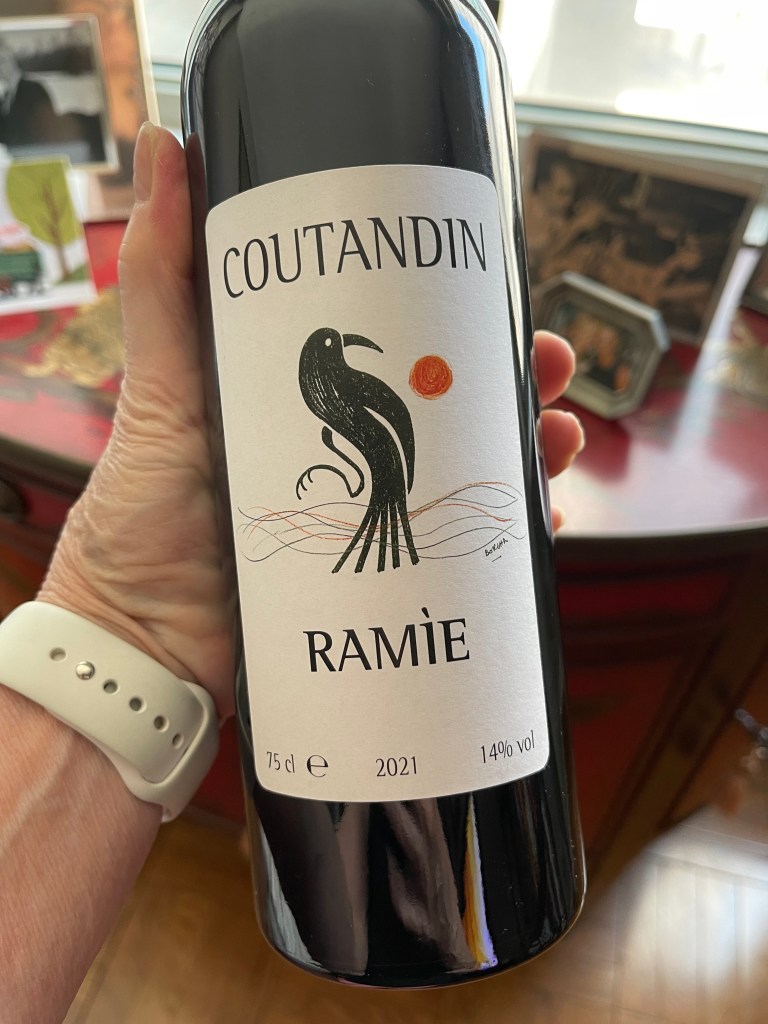
What a find! This wine comes from the Pinerolese DOC just outside the city of Torino, and it’s unlike any Piemontese wine I’ve tasted. It’s a blend of native grapes: Avanà (30%), Chatus (20%), Bequet (20%), Avarengo (15%), and Barbera (15%).
In 1995 Giuliano Coutandin opted out of retirement, deciding instead to devote his efforts to rehabilitating a few abandoned vineyards in the Val Chisone, east of Torino. Not an easy task in this rugged region, where vineyards lie on precipitously steep slopes. In fact, Coutandin had a monorail built so he could access areas where the incline reaches 90%!
Giuliano, Daniele’s son, now tends the vineyards according to organic principles, although they are not certified. With just 4,000 bottles produced annually, the costs outweigh the benefits. Each of the grape varieties in this blend come from plots intermingled with other crops like zucchini, herbs, and wildflowers. Vinification is via indigenous yeast; use of sulfites is minimal and occurs only before bottling.
Tasting Notes and Pairing
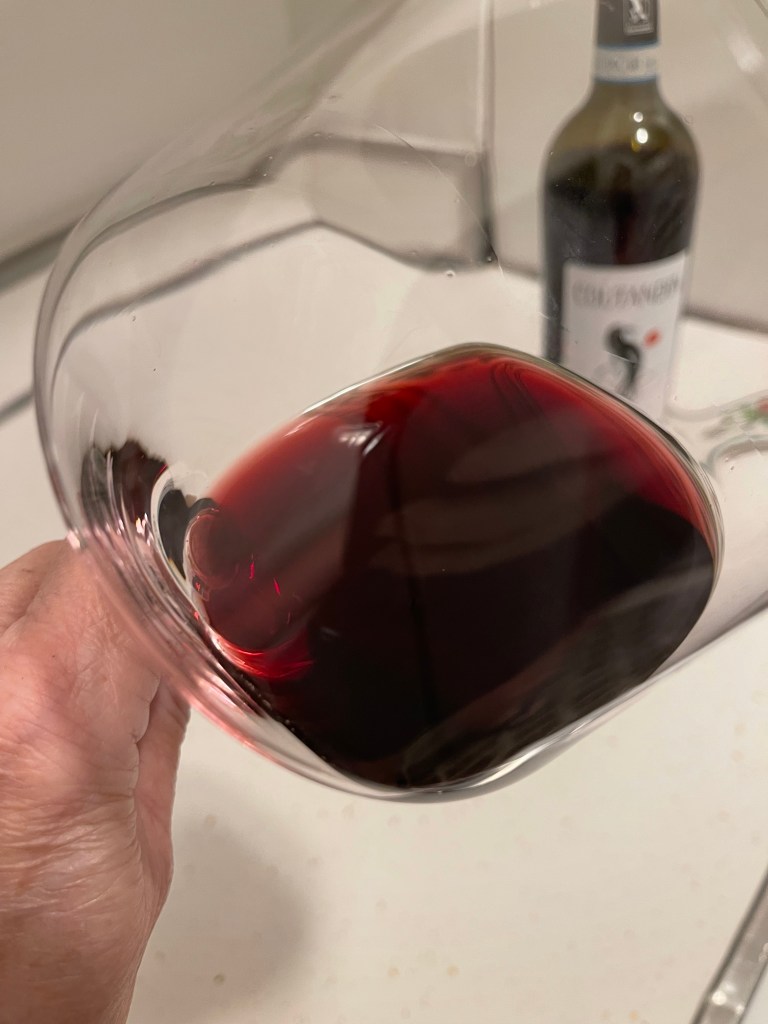
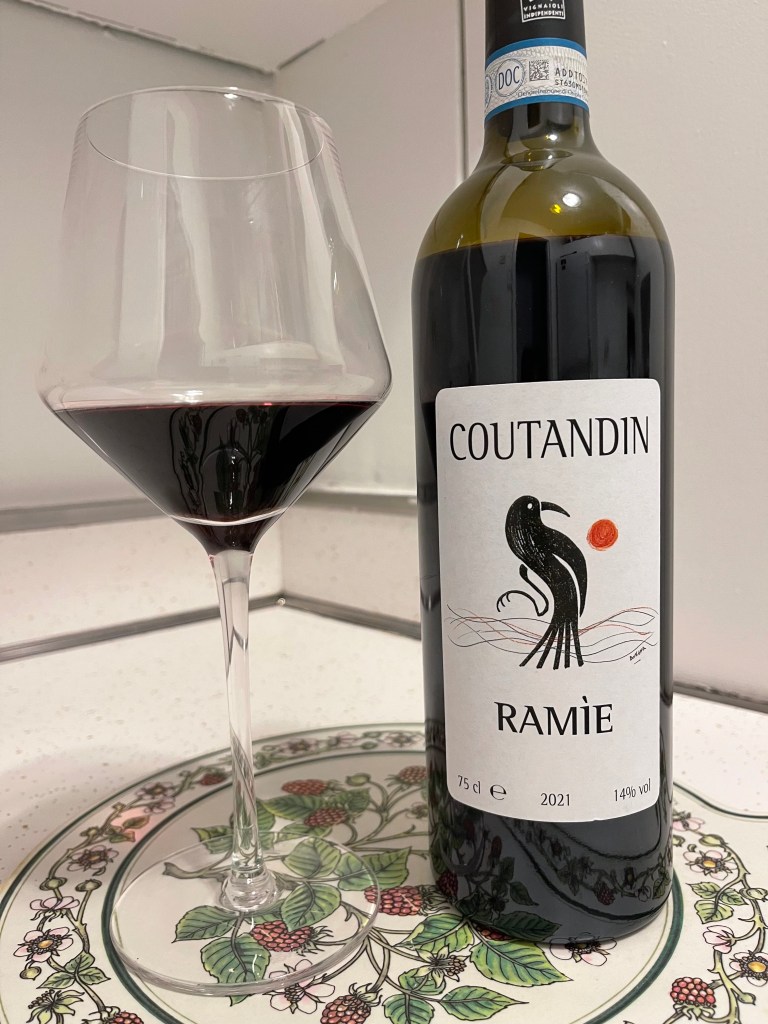
Deep ruby color, with a faint garnet tinge at the rim. The nose is quite aromatic, with black cherry, blackberry, and plum accented by a fresh, earthy note – imagine walking through a freshly-tilled garden plot. As it opens, there is a little pine, rosemary, violet, dried orange peel, and a mineral/slightly smoky note. On the palate it’s full of juicy black fruit, a hint of salted plum, and an intriguing spicy tang. Moderately high acidity and slightly grippy tannins are nice complements to the fruit. This one intrigued me, kept me guessing throughout the evening!
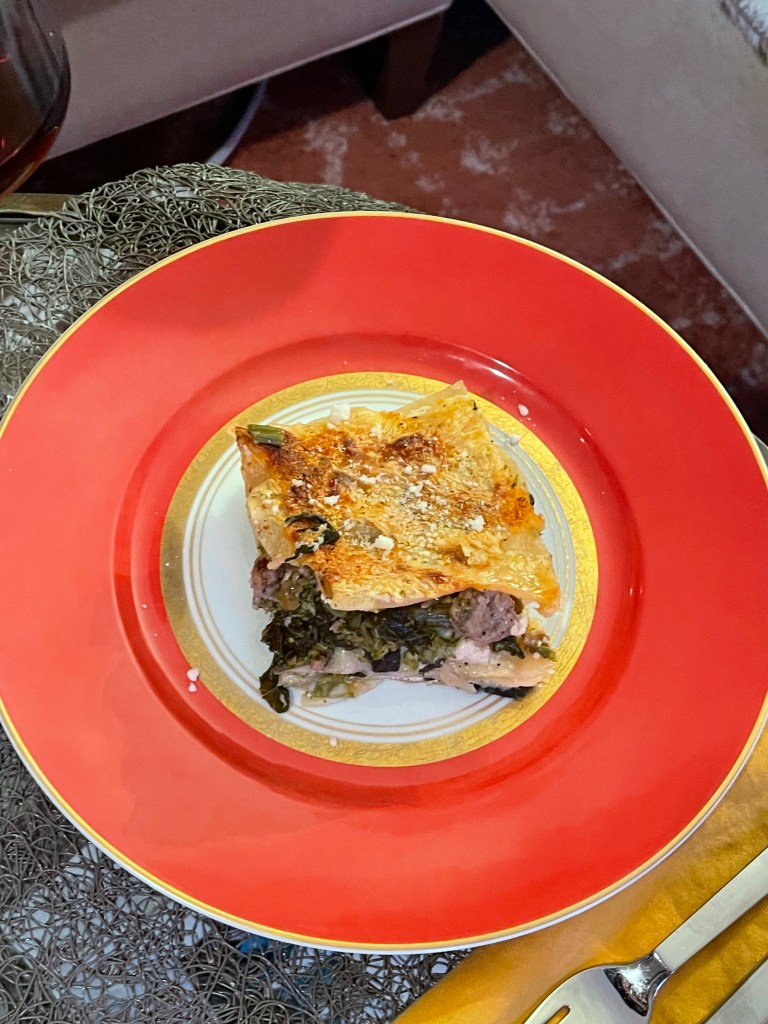
I paired it with one of my favorite cool-weather dishes: broccoli rabe lasagna with sweet Italian sausage. Because, until today, the weather in NYC has been unseasonably cool. A lovely, heartwarming match.
Enjoy Wednesday’s race; I’ll have a preview of Stage 12 and a wine suggestion for you tomorrow!


Well, Spoiler Alert…Visma did not close that gap and Eulalio, with that glorious smile, remains in Pink! What a joy it was to watch, Narvaez and Mas, race to the finish! It’s good to see Mas back in the race and Narvaez, well…he is something special. Let’s see what happens today!
As to that wine! What a fabulous find! 3 varieties I have never heard of! I love that he decided to nurture these abandoned vineyards and that his family continues! Your description is enchanting! There are so many places and wines to explore in Italy and a couple weeks left in this race!
LikeLiked by 1 person
Thanks so much Robin! This Giro has been one exciting stage after another, and the gorgeous landscapes of Italy never disappoint. I’ve tried to highlight a few wines that are off the beaten path. Not always easy to find, but always worth the effort. I hope you enjoy the rest of the race. So nice to have you aboard! Thanks again for taking the time to read and comment. Cheers!
LikeLike