Well, Saturday’s race sure didn’t disappoint . . .
We watched the peloton winnow itself down to a handful of riders, including most of the top ten overall. The yellow, white, and polka dot jerseys were all in the mix, jockeying for position up the final climb. It was a true war of attrition, in which several stumbled and a few prevailed:
A brutal day, for sure, but one which set the stage for a dramatic final week on the road.
Afterward, I watched The Move, a live broadcast hosted by former cycling champions Lance Armstrong, Bradley Wiggins, and George Hincapie. While discussing the results of Stage 14, Spencer Martin (aka The Professor) shared an interesting statistic: as of the midpoint of Saturday’s race, the peloton had completed just 53% of all the climbing in this year’s Tour.
There are only seven days of racing left, which means the final week is going to be one hell of a slog! Oh, the poor sprinters . . .
What to Expect in Sunday’s Race
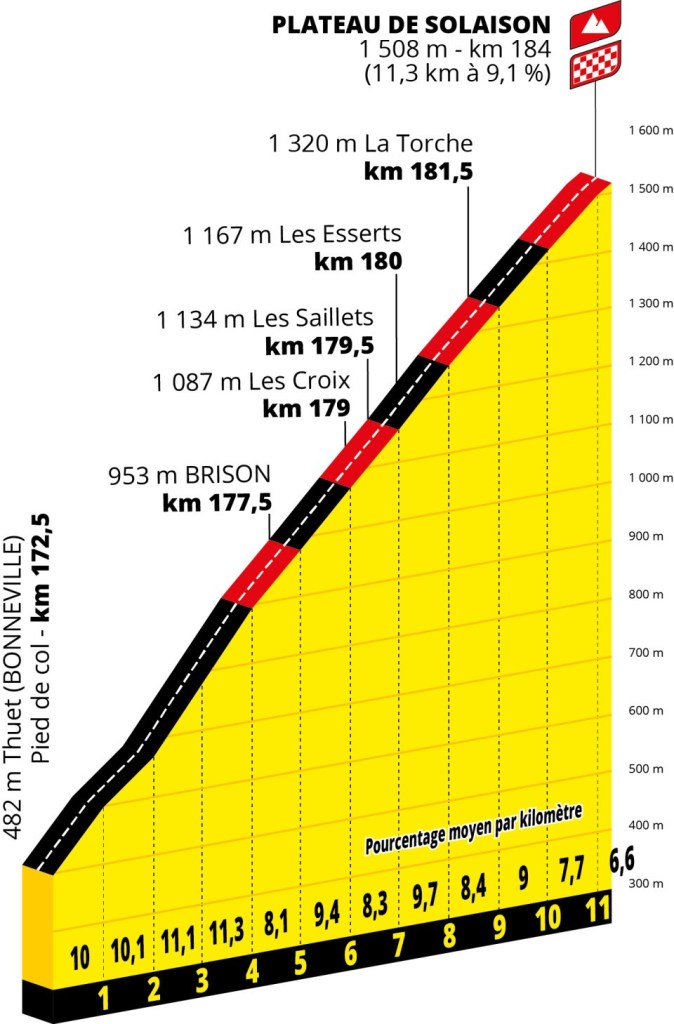
Stage 15 is long (184 kilometers) and includes four categorized climbs, the last of which is an HC-rated summit finish. HC stands for hors catégorie, or beyond category, a classification reserved for the tallest, steepest, most difficult climbs. We watched a few of the GC favorites falter today; it will be interesting to see how they approach the race tomorrow.
Wine Recommendation: Cerdon-Bottex NV Bugey-Cerdon “La Cueille” Méthode Ancestrale ($24; 8% abv)
Bugey-Cerdon lies in the western Alps, perched between the Savoie and Jura wine regions in the Ain département. The terrain here is rocky and steep, where the term “heroic viticulture” clearly applies. These perilous slopes are home to vines that must tunnel their way through calcareous bedrock to survive.
Patrick and Catherine Bottex have tended their five hectares of Gamay and Poulsard vines on limestone slopes above the Ain River since 1991. They make just a small amount of this light-bodied sparkling wine made via the méthode ancestrale:

Grapes are crushed and pressed following a light maceration to obtain the desired pink color. After settling, the juice is transferred to vats for fermentation, which is spontaneous (i.e., without the addition of yeast.) Midway through fermentation, the wine is bottled and cellared, where fermentation resumes without the addition of sugar or yeast. After two months, fermentation stops naturally and the wine is filtered and permanently corked.
The property is certified as Haute Valeur Environnmentale (HVE), France’s highest-level environmental certification for farms, recognizing sustainable agricultural practices that protect biodiversity, manage water and fertilizer use responsibly, and limit chemical inputs.
Tasting Notes and Pairing
This wine is a blend of 80% Gamay, 20% Poulsard. It is pale violet in color, with aromas of ripe strawberries, red currants, and blackberries. The mousse is soft and foamy, much more delicate than in traditional method sparkling wines. On the palate it’s all tart red fruit, with a hint of sweetness. It reminds me of picking strawberries from my grandparents’ garden as a kid – eating more than I put in the basket, my face and hands painted a bright pinky-red. The best memories of a childhood summer . . .
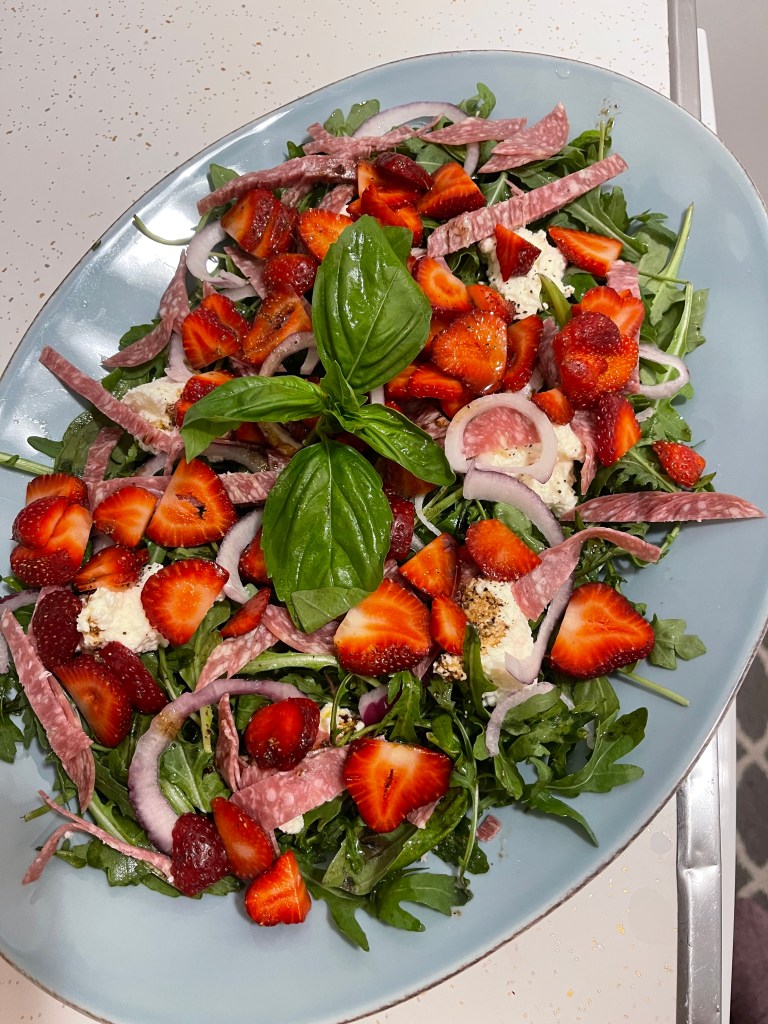
You can pair Bugey-Cerdon with a basil, strawberry, and mozzarella salad topped with sweet salami, as you catch up with an old friend. But this wine can be the star of the show, too. Sometimes less is more, especially on a hot July evening, as you listen to the crickets, watching the sun go down.
Which I am clearly not doing from the upper east side of Manhattan, by the way. But a girl can dream, right?
Enjoy another crazy day in the mountains. Monday’s a much-needed rest day for the peloton, but I’ll be back before Tuesday’s stage with a preview of the race and another wine for you to try!
 The Swirling Dervish