But first, a recap of what happened during Stage 15 on Sunday:
What to Expect in Tuesday’s Race
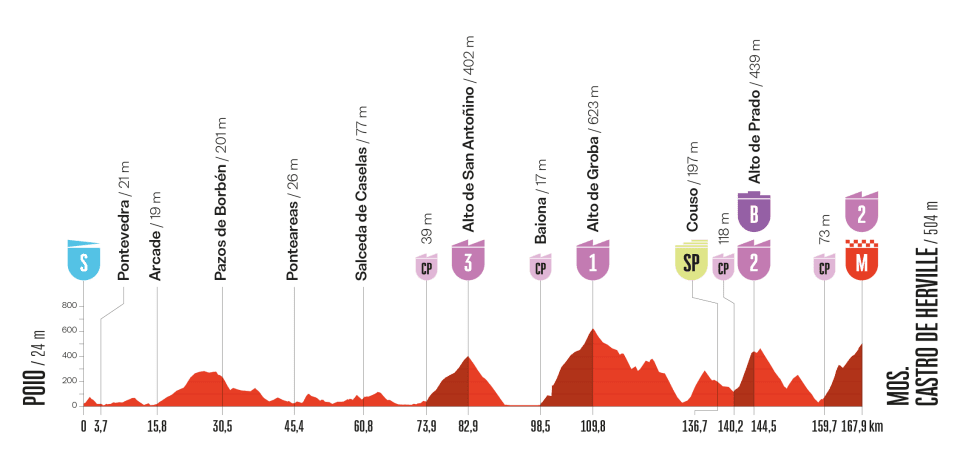
As you’ll see from the profile map, Stage 16 will pose another challenge to the peloton: 168 kms long, with four categorized climbs and a mountaintop finish (itself a Category 2). Those riders who recovered well on the rest day will have the advantage. But let’s also remember where we are: the far northwest of Spain, along the Atlantic coast: a place where wind and rain always threaten.
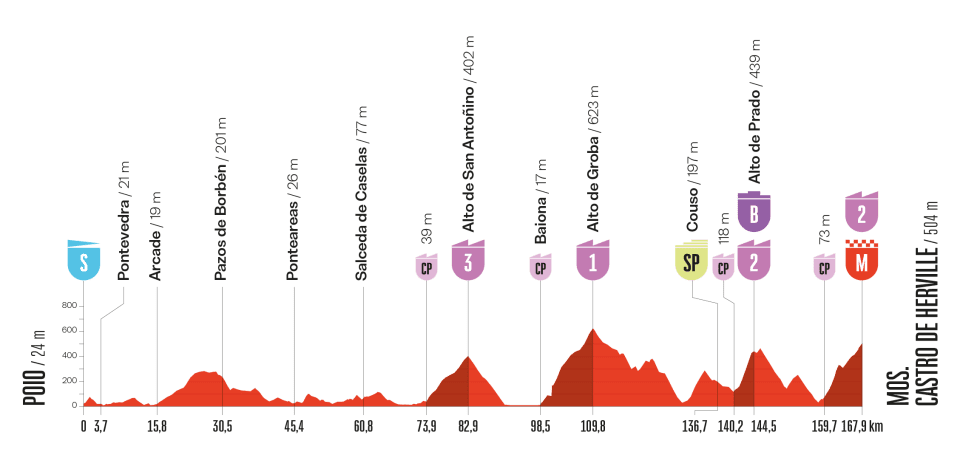
Team support (and teammates with good legs) will be essential to GC aspirants as we enter the final week of the Vuelta. Visma would seem to be the best bet, with Bora-Hansgrohe and (perhaps) UAE. Week 3 of any grand tour is always unpredictable, so expect surprises at every turn.
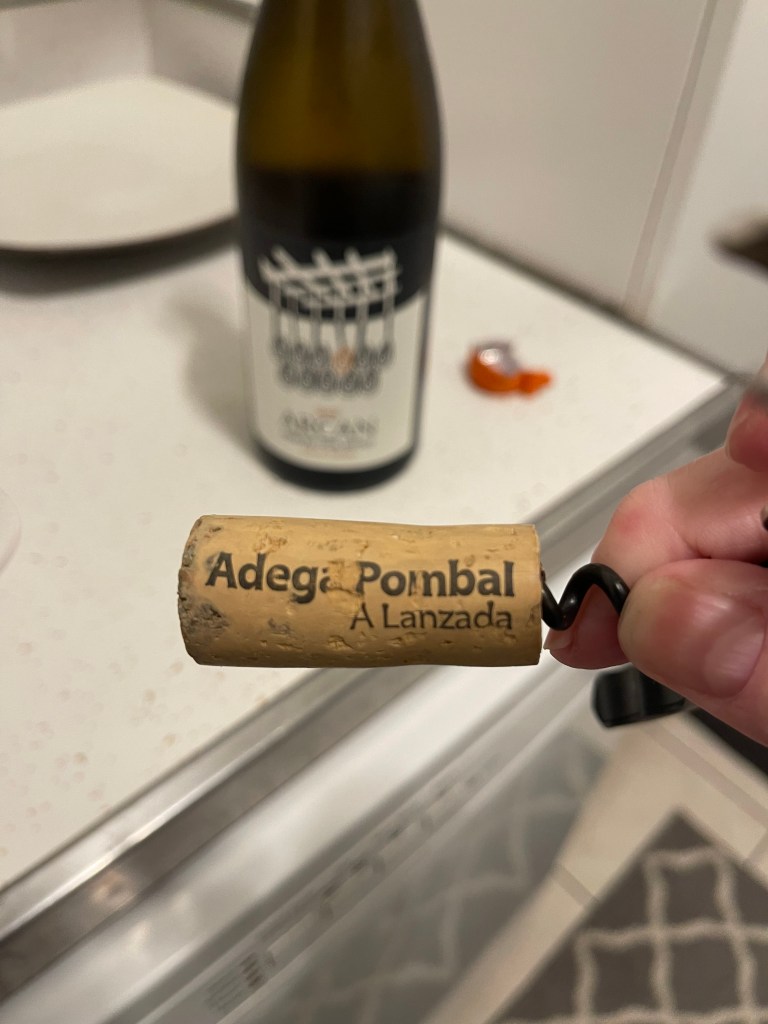
Vuelta Vaso de Vino Recommendation: 2022 Adega Pombal a Lanzada Arcano Albariño ($15.99; 13.5% abv)

Rías Baixas is home to the thick-skinned Albariño grape, which produces aromatic, fruity white wines that match well with local seafood. In general, the region is cooler and rainier than other wine producing areas of Spain, but there are five subzones in which conditions vary, resulting in distinctly different styles of wine in each.
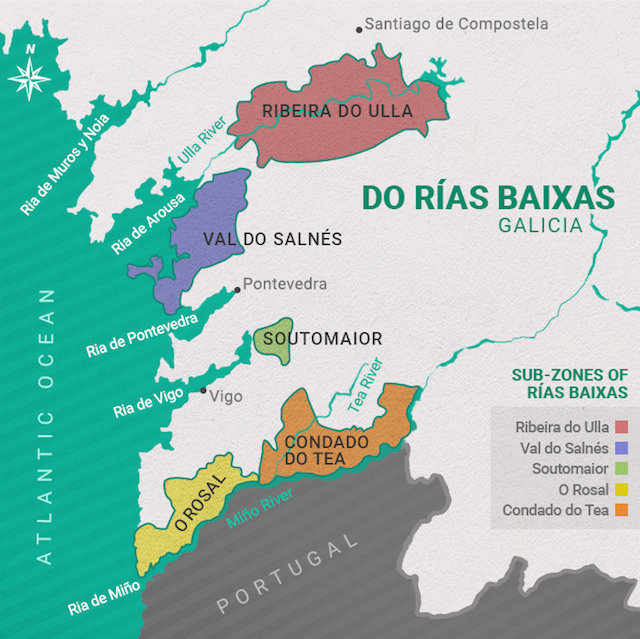
The Adega Pombal property lies in Val do Salnés, where vineyards have direct ocean exposure (this subzone sees more rainfall than any other.) It’s a place where the grape’s thick skins are an asset, helping fed off fungal diseases that thrive in a rainy climate. For this reason, many winemakers grow their Albariño on old-fashioned, granite-staked trellises, allowing air to circulate under the vines and dry them out.

José Maria Pombal and his family consider themselves mejilloneros (mussel farmers) first, grapegrowers second, as that’s been the family business for decades. While they’ve grown grapes for just as long, they never marketed their wines, choosing instead to offer a jug of vino de la casa to their best customers. That changed in 2010, when they bottled and sold their wine for the first time.

Viticulture is organic, a heroic choice in this climate. Grapes are hand-harvested, then destemmed, crushed, and pressed in a pneumatic press. The must is racked and fermented for eight days after which it ages in stainless steel tanks for 10 months. There is no malolactic fermentation, consistent with the goal of retaining primary fruit aromas and natural acidity.
Tasting Note
Medium gold color with pronounced aromas of lemon, peach, sweet orange, and melon. After an hour I picked up notes of beeswax and honey. This wine smells like a Mediterranean garden planted next to a citrus grove. But I guess that tracks.
On the palate there are gobs of ripe yellow fruit (peach, pear, apple) with subtle hints of apricot, quince, and tart-sweet lemon curd. As with the nose, it opens over time to reveal more savory notes of mint and thyme. It’s been a while since I’ve had an Albariño with a few years of age on it. Note to self: do this more often!
Enjoy the dramatic scenery of Rías Baixas, as well as the drama that’s sure to unfold in Stage 16. I’ll be back tomorrow with a preview of Stage 17 and a wine recommendation to match.
 The Swirling Dervish
Love me some Rias Biaxas! Fun story of being mussel farmers first then making wine!
LikeLiked by 2 people
It is a great story! As for the wine, I don’t think I’ve tasted an Albariño with a couple of years on it. Shows so well!
LikeLike