Friday’s race gave Italy another chance to show off her beauty. After taking in the scenery of Liguria in Stage 12 on Thursday, I didn’t think I could be wowed again so soon.
Boy, was I wrong!
For example, the peloton pedaled past Isola Bella, which translates to Beautiful Island. Go figure . . .
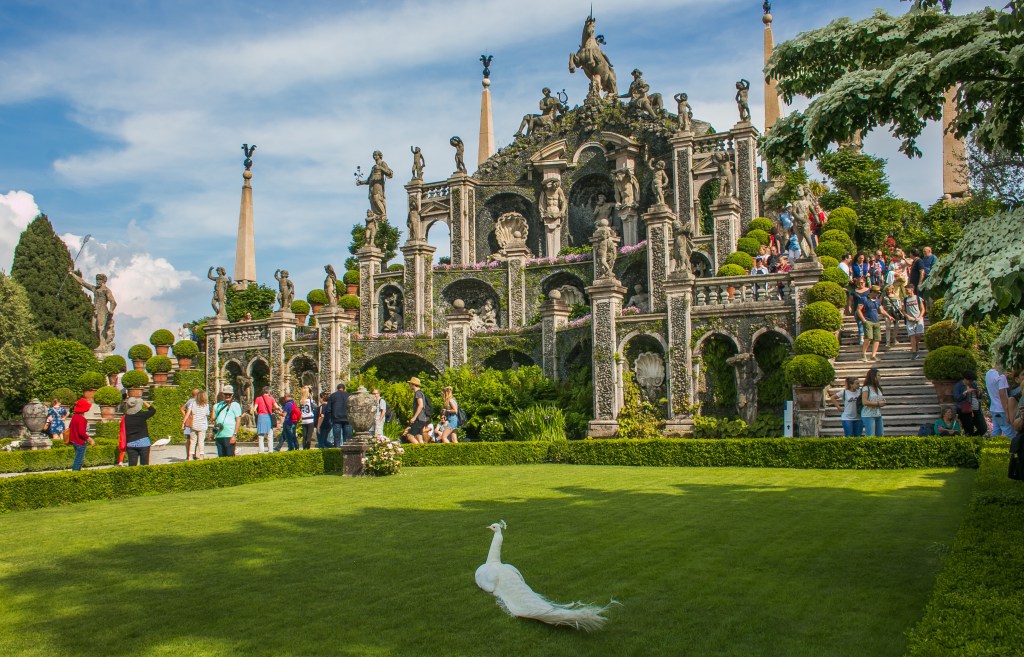
The race moved slowly for most of the day, giving us a lot of time to appreciate the backdrop. But after the first climb, Alberto Bettiol of Team Bahrain Victorious and Andreas Leknessund of Team Uno-X Mobility kicked things up a notch. They put a lot of time between themselves and the peloton, promising a duel to the finish.
Here’s how it played out:
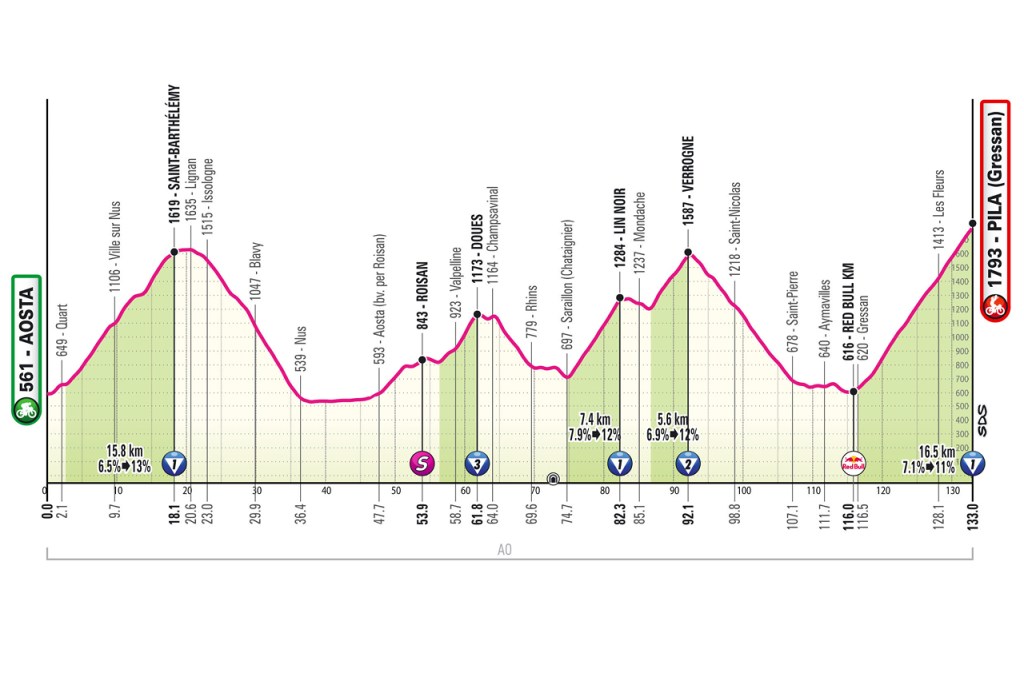
Stage 14: Aosta to Pila; 133 km; mountains, summit finish; 5 categorized climbs.
Saturday’s race will separate the true GC contenders from the posers. A bona fide mountain stage, the riders will climb 4,350 meters before the day is through. It’s what the Spanish call rompe piernas or leg-breaking. I’d wager that by the end of the day, some spirits may be crushed as well . . .
Jonas Vingegaard and Team Vizma-Lease a Bike have announced that they intend to dominate this stage. A daunting declaration for sure; let’s see who’s up to the challenge!
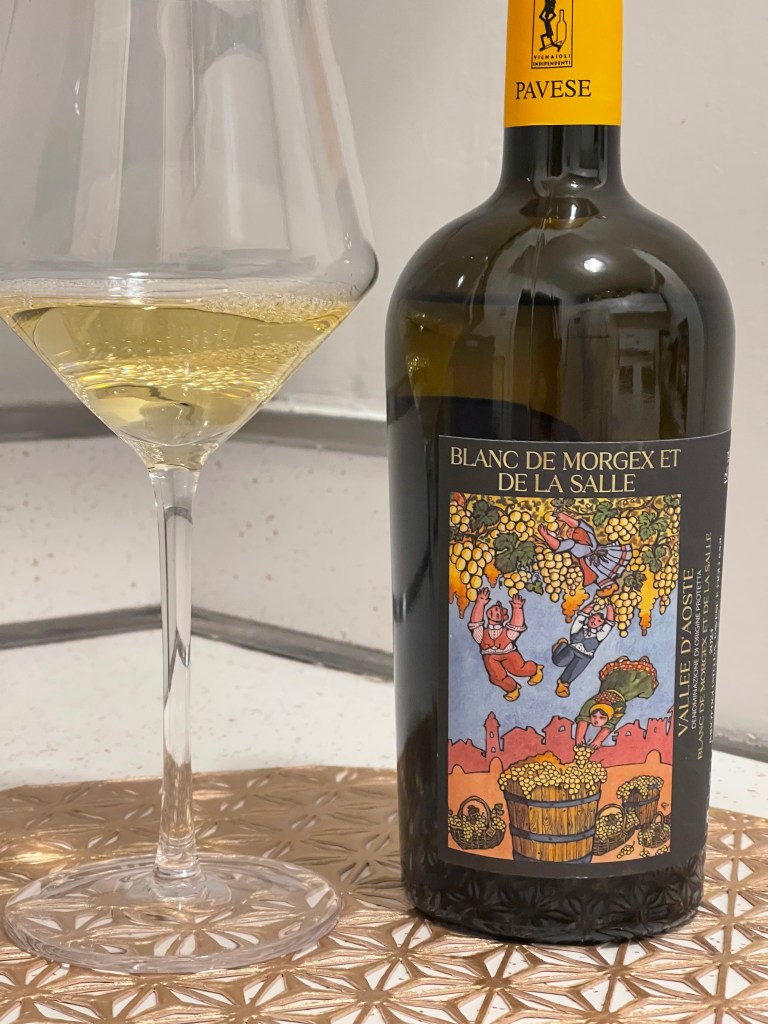
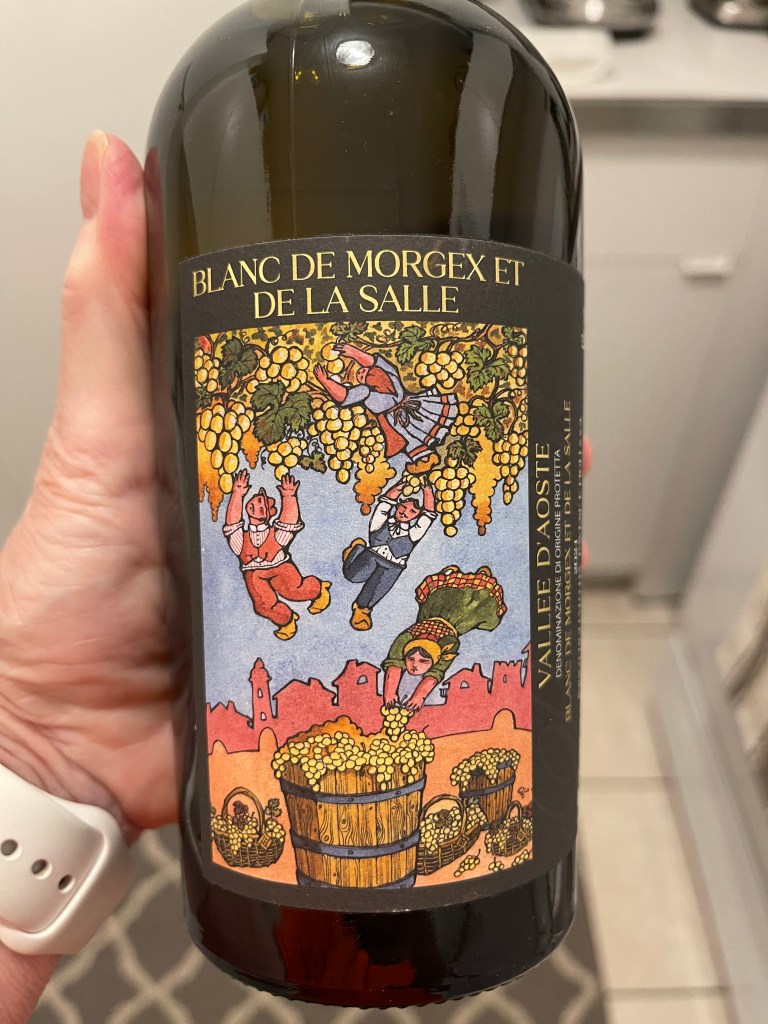
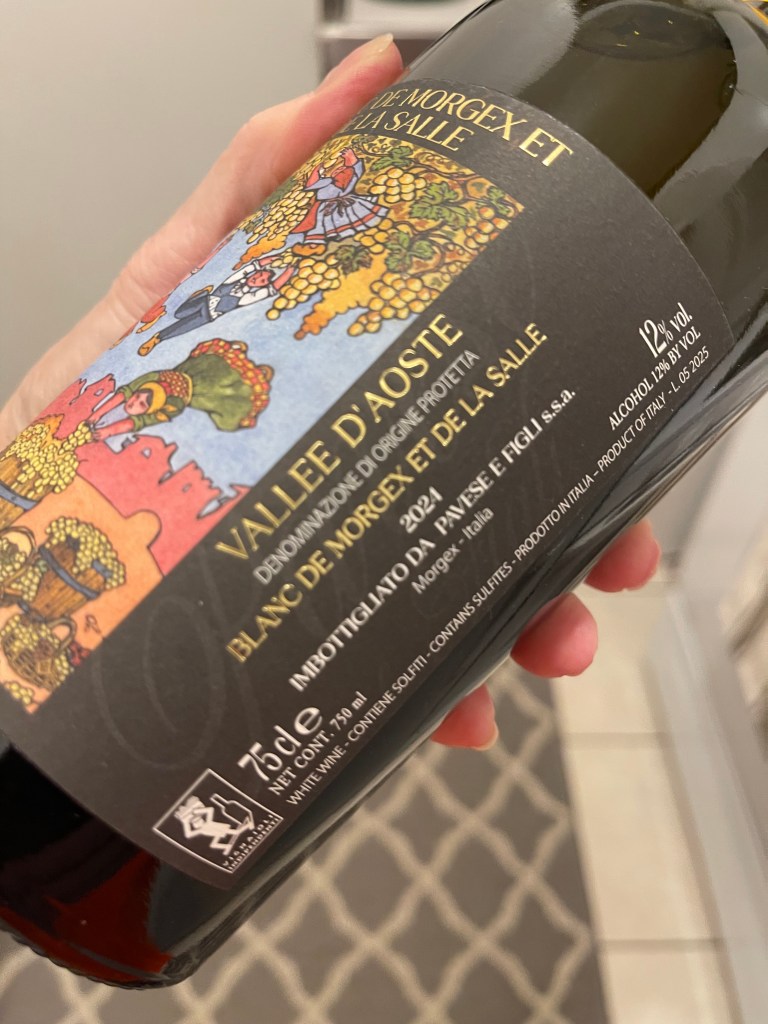
Wine Recommendation: 2024 Ermes Pavese Blanc de Morgex et de la Salle, Valle d’Aoste ($37; 12% abv)
Ermes Pavese works his vineyards in the commune of La Ruine, just minutes from the summit of Mont Blanc. His two hectares of vines lie at 1,200 meters above sea level and are planted on original root stock. He produces several versions of Blanc de Morgex et de la Salle: sparkling, orange (aka skin-fermented), sweet, and dry. Most of his wines are fermented and aged in stainless steel or ceramic vessels, but Ermes and his son Nathan are experimenting with barriques.
The wine I’m recommending is a dry white made from 100% Prié Blanc.
About Prié Blanc
Also known as Bernarde in the Swiss region of Valais and Legiruela in Spain’s Castilla y Léon, this ancient variety is believed to originate in the high altitudes (900-1200 meters above sea level) of Valle d’Aosta, particularly around Mont Blanc. Because phylloxera does not thrive in these cool, alpine conditions, Prié Blanc vines are planted on original root stock. Wines may be dry, sweet, or sparkling.
Tasting Notes and Pairing
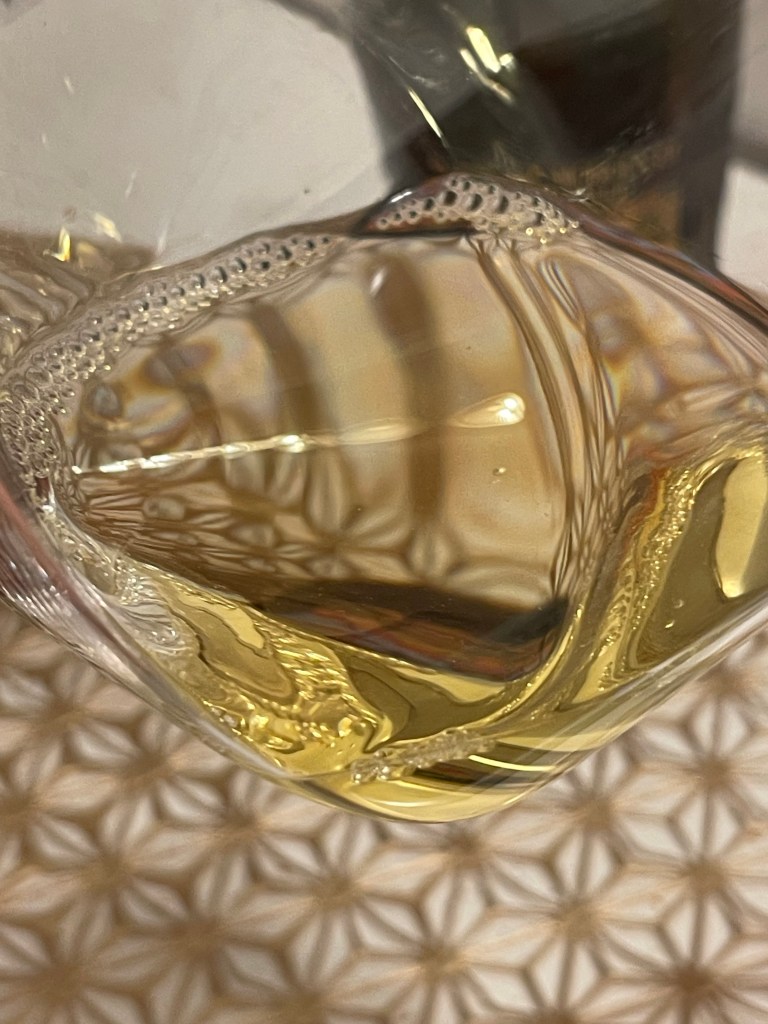
Pale lemon color. Bewitching aromas of acacia flower and clover; ripe peach and apple, freshly grated orange rind. On the palate it’s more restrained: light-to-medium in body, with a distinct mineral crispness. It’s less effusive than the nose, tending more toward citrus (orange and lime) with a complex finish evocative of grapefruit pith and honey. It’s a gorgeous wine with structural balance; a wine that tells the story of a place. Sunshine, fresh air, and contentment.
Which dish did I serve with the Blanc de Morgex et de la Salle?
None. Gabe and I started our weekend early, enjoying a glass as an apéritif this afternoon. Our weather in NYC is similar to that of Valle d’Aosta today, with temps in the 60s and a cool breeze flowing through the windows. All we needed was the wine . . .
One pairing comes to mind, though. Every spring my mom eagerly anticipated the arrival of fresh shad at the fish market. She and my grandmother would serve it (and the roe) with new potatoes and stewed tomatoes, all of which came from my grandparents’ garden. Shad isn’t as easy to find these days, but this wine would also make a brilliant partner with any mild fish or white meat.
Have you tried Blanc de Morgex et de la Salle? Please tell me about your experience, especially any pairings you’ve enjoyed.
Thanks for following my Giro wine journey. I’ll touch base tomorrow with a preview of Stage 15 and a wine to match!

