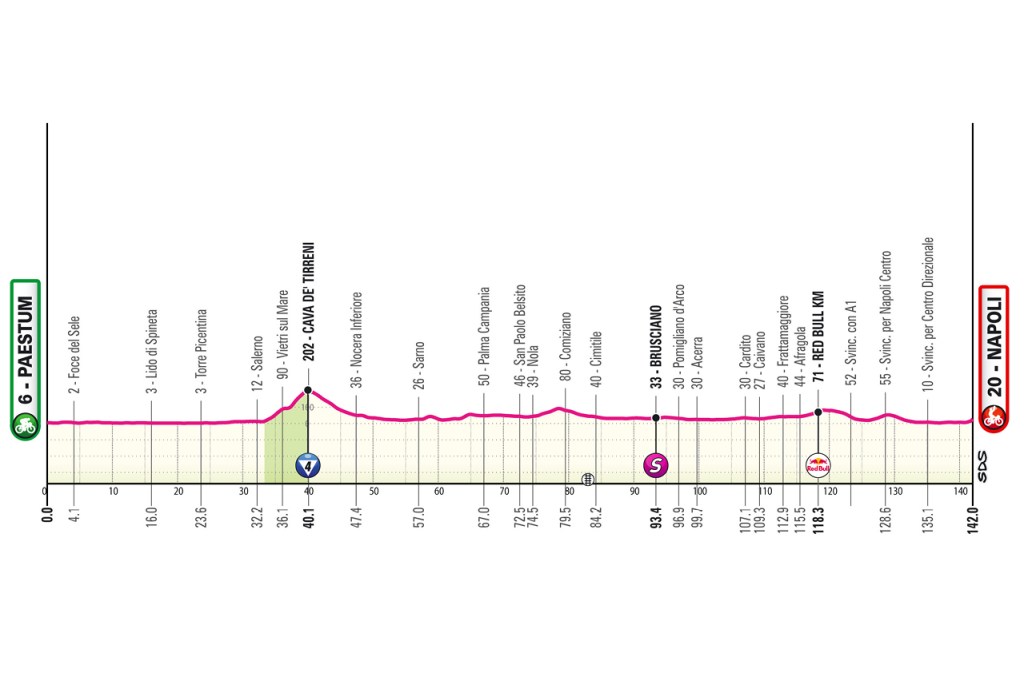
Stage 6 takes us north on the Tyrrhenian Coast, from the ancient city of Paestum to the bustling streets of Naples. After the torrential rain, wind, and hailstones that attacked the peloton on Stage 5, I’m hoping for sunshine, dry roads, and a crash-free day. The scenic route should be a welcome change, with a flat course favoring the sprinters. Perhaps Thursday will be Jonathan Milan’s day?
Here’s a recap of the misery on Stage 5, including a heroic, one-on-one fight to the finish between Alfonso Eulalio (Bahrain Victorious) and Igor Arrieta (UAE-Team Emirates). Crashes? Two of ‘em. A wrong turn that almost ended in disaster? Yep, we’ve got one! What an exciting end to an otherwise forgettable stage:
Volcanic Soils in Campania
Volcanoes (active or extinct) are visible practically everywhere you look in Campania. It’s why this part of Italy is known to geologists as the Campanian Volcanic Arch.
We all know the story of how Mount Vesuvius carpeted the city of Pompeii in molten lava in 79 AD. The bad news? It’s still active. Volcanologists (yes, there’s such a thing) predict the next eruption will be sometime in the next 500 years. Not a comforting thought if you’re one of the millions of people living nearby . . . .
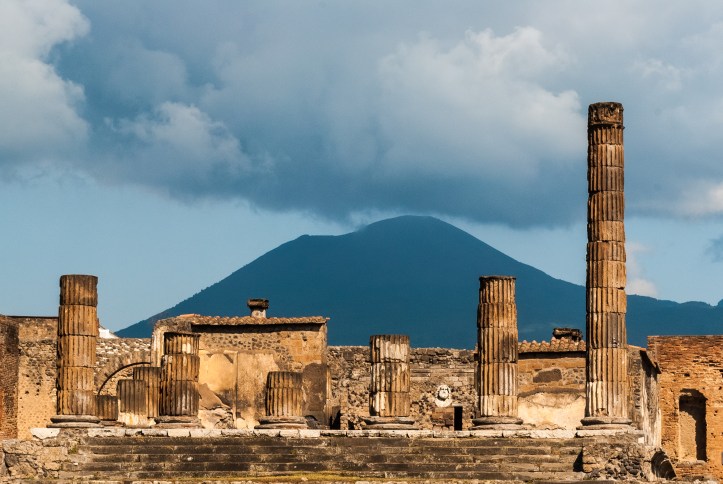
Just northwest of Vesuvius lie the Campi Flegrei or Fields of Fire, so named by the Greeks for the many volcanoes, cones, and craters that dot the landscape. Visitors to nearby Pozzuoli can expect to see steamy sulphurous trails rising from the rocks. The land itself expands and contracts over the course of a day, inhaling and exhaling, biding its time. Something is always brewing.
Ischia, the island just off the coast of Naples, is famous for its green volcanic soil. Centuries of eruptions below the sea surface have flushed out green mineral ores that were buried underneath. It’s no accident that Ischia is also well-known for its thermal hot springs, touted as a cure for whatever ails you.
While not every part of Campania boasts an active volcano, just about every square inch of soil contains volcanic ash, spewed from Vesuvius and others over millennia. Not even the steep hillsides of Irpinia, east of Naples, are exempt from the influence.
About the Mastroberardino Family
Piero Mastroberardino represents the 10th generation of his family to manage this enterprise established in 1878 in Atripalda, about 20 miles from Naples. Presently the family owns wine estates in all of Campania’s DOCG territories: Greco di Tufo, Fiano di Avellino, and Taurasi.
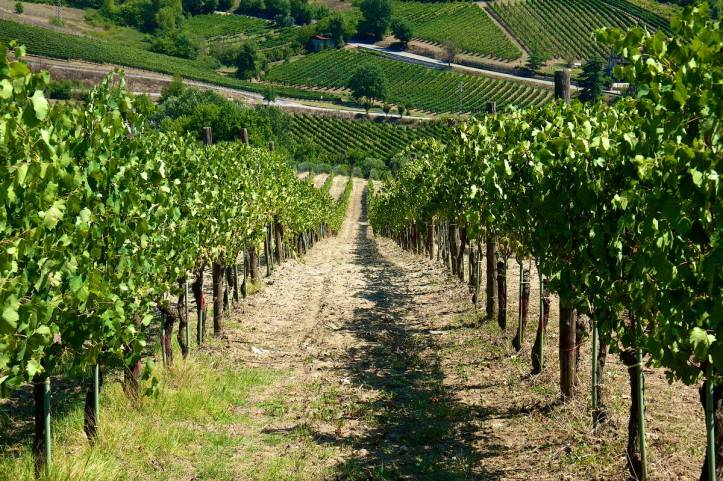
The family’s main claim to fame is its role in protecting and re-establishing native grape varieties. In 1996 the Italian government selected Mastroberardino to manage the wine-related piece of the Pompeii Preservation Project. The goal of the project is to create an historic monument to viticulture as it was carried out in ancient times. Native vines have been planted on the historic site of Villa dei Misteri, just as the Romans intially did. Proceeds from the sale of these unique wines fund the restoration of the ancient cellar at Foro Bario.
2024 Mastroberardino NovaSerra Greco di Tufo DOCG (13.5% abv; $26 retail)
100% Greco harvested from the 33-acre NovaSerra vineyard, which sits at almost 2,000 feet above sea level. Vines face southeast and lie on soils of clay, limestone and (of course!) volcanic ash.
Fermentation was in stainless steel tanks for 15 days. The wine sees no time in oak but did rest on its fine lees for five months, adding richness to the texture. After two months in bottle, the wine was released for sale.
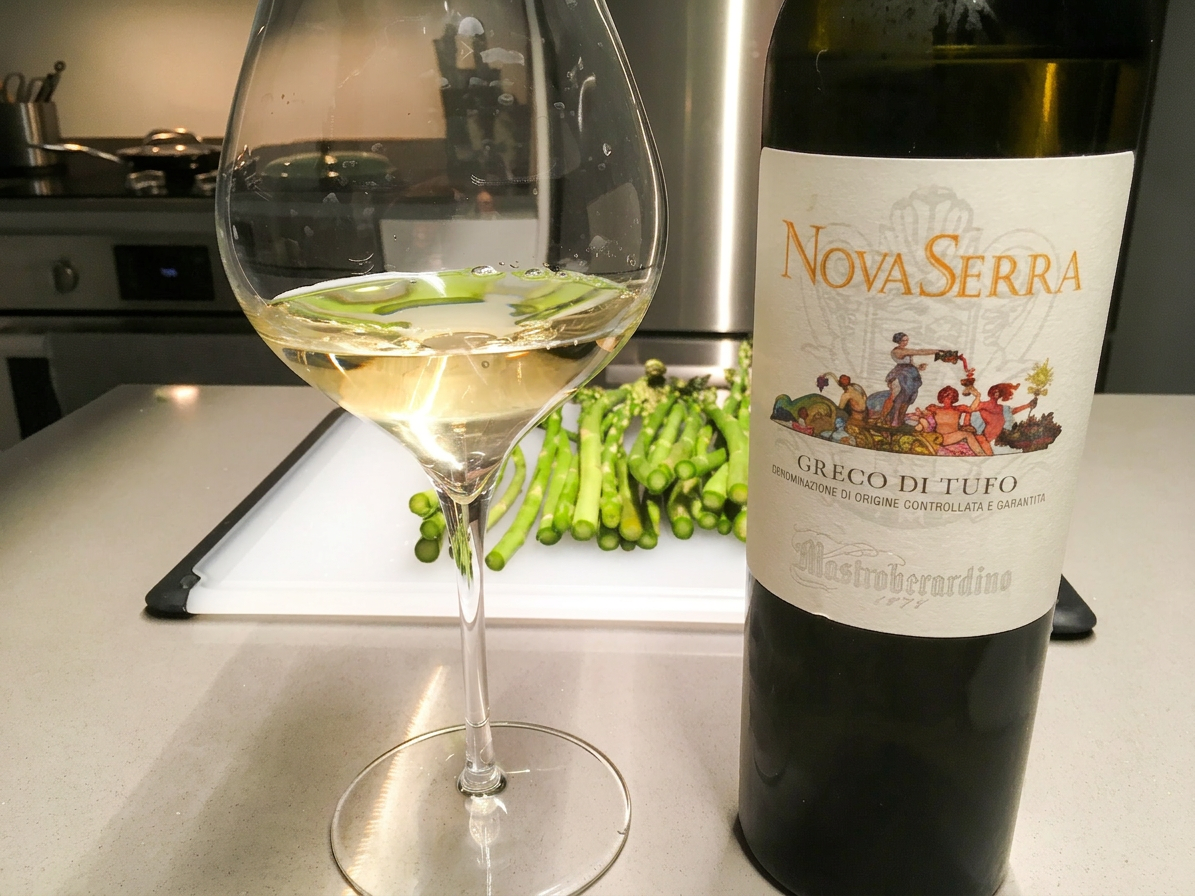
Color: Pale lemon; clear rim.
Nose: Distinctly savory and not what I expected! There were some white flower and almond notes but the overwhelming sense was herbal, wet rocks, and how a garden smells after rainfall. This wine had my attention!
Palate: Medium+ acidity balanced by a lovely richness in texture. More fruit elements here, white peach, some lemon peel, but it’s also very saline and savory. All the components in balance, medium+ finish. I couldn’t stop drinking this wine.
Pairings? This is a perfect accompaniment to the fresh produce that’s hitting the market now. Asparagus, peas, morel mushrooms – whatever’s local works. A simply grilled piece of fish with lemon butter and herbs would do nicely as well!
Enjoy the seaside views, hopefully with a glass of Campanian wine in hand. I’ll be back with a preview of Stage 7 and a wine to match!


Am way behind on reading your wonderful Giro d’Italia posts!….but as usual am loving your photos, food & wine pairings….and fascinating, entertaining info….grazie!
LikeLiked by 1 person
Thank you so much! It’s a crossover of three things I love most: wine, food, and cycling. Happy you’re aboard! 😊🚴🏻♀️🥂
LikeLiked by 1 person