My previous post featured a guided tasting of six Madeira wines from multiple producers. Here we will explore Madeira’s versatility at the table, specifically how its many styles and sweetness levels take it way beyond the dessert course.
Each of Madeira’s principal grape varieties (Sercial, Verdelho, Boal, Malvasia, and Tinta Negra) offers a distinct style and level of sweetness. Drier styles may be served chilled as apéritifs, while the sweetest wines are often paired with desserts. But there’s a lot of leeway here, as all the wines retain high levels of acidity: quite helpful when it comes to food and wine synergy.
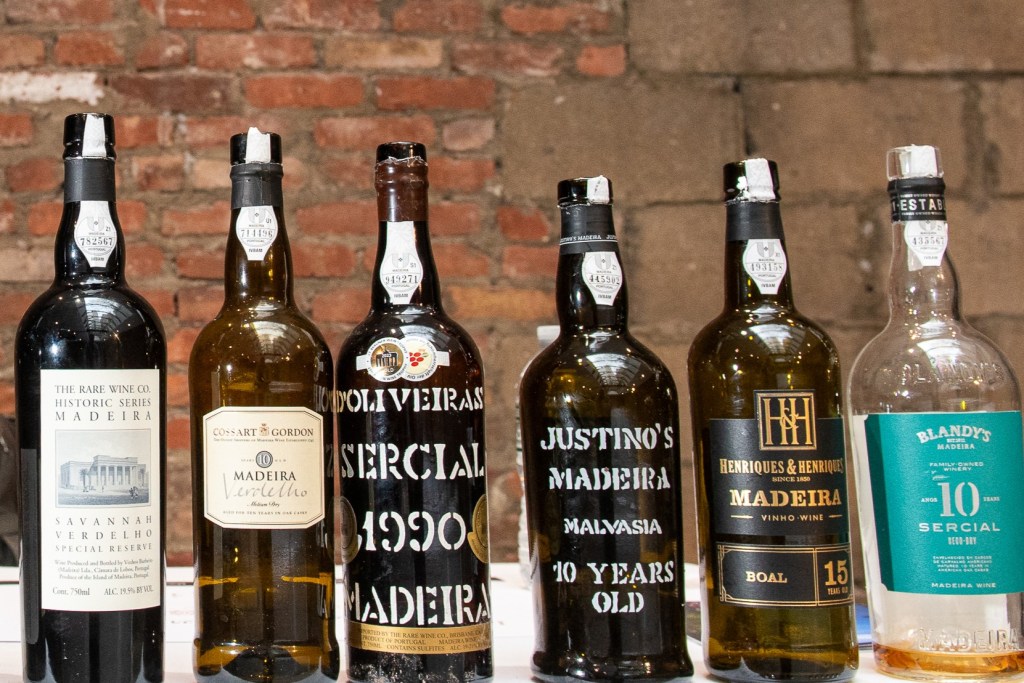

Our second tasting of the day highlighted Madeira’s ability to accommodate both sweet and savory delicacies. We enjoyed six wines alongside four dishes prepared by Nuno Sousa, Executive Chef at New York’s Leitao Restaurant.
What a treat that was!
Course #1: Tender Grilled Octopus with Vesuvio Tomatoes and a Red Pepper and Paprika Sauce
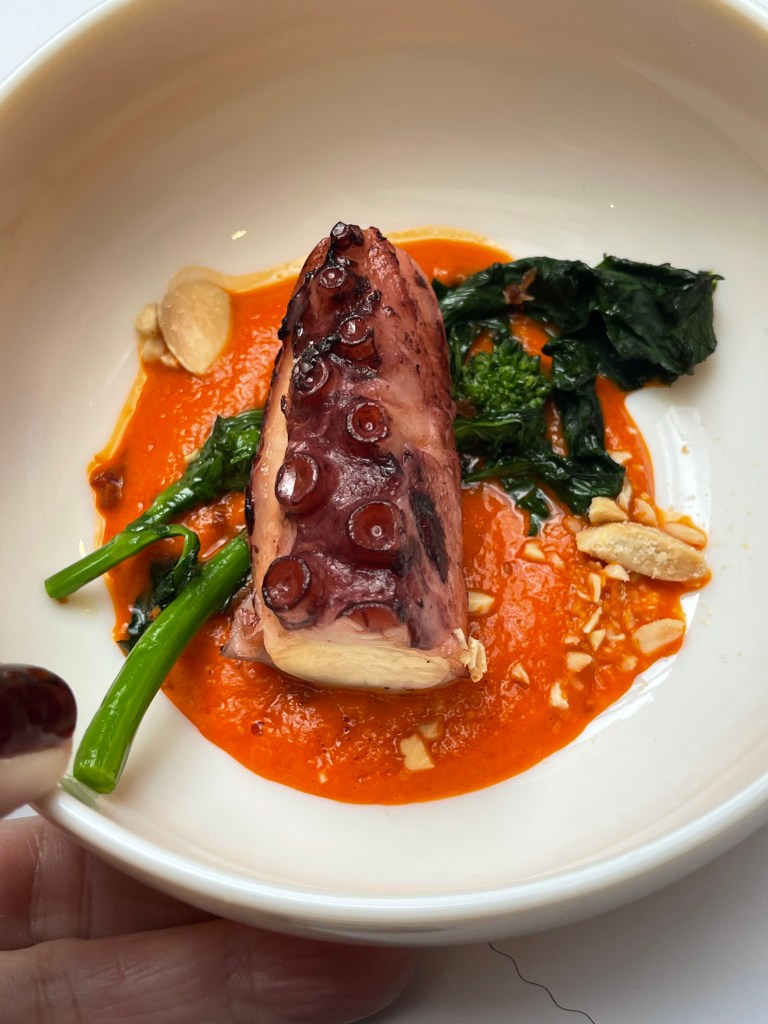
This beautiful dish was a feast as much for the eyes as for the tastebuds. The sweetness of the octopus contrasted with the tangy-sweet tomatoes and the more herbaceous red pepper sauce. It was (almost) too pretty to eat!
The Wines: Cossart-Gordon 10-Year-Old Verdelho and Vinhos Barbeito Savannah Verdelho Special Reserve

Made from the same grape variety, these two wines differed slightly in aroma and flavor. The Cossart-Gordon was more savory and herbal on the nose, and quite citrusy and spicy on the palate. The octopus brought out its sweeter notes. The Barbeito smelled and tasted sweeter, with smoky and buttery notes and salty/spicy orange and almond flavors. Both worked well with the dish.
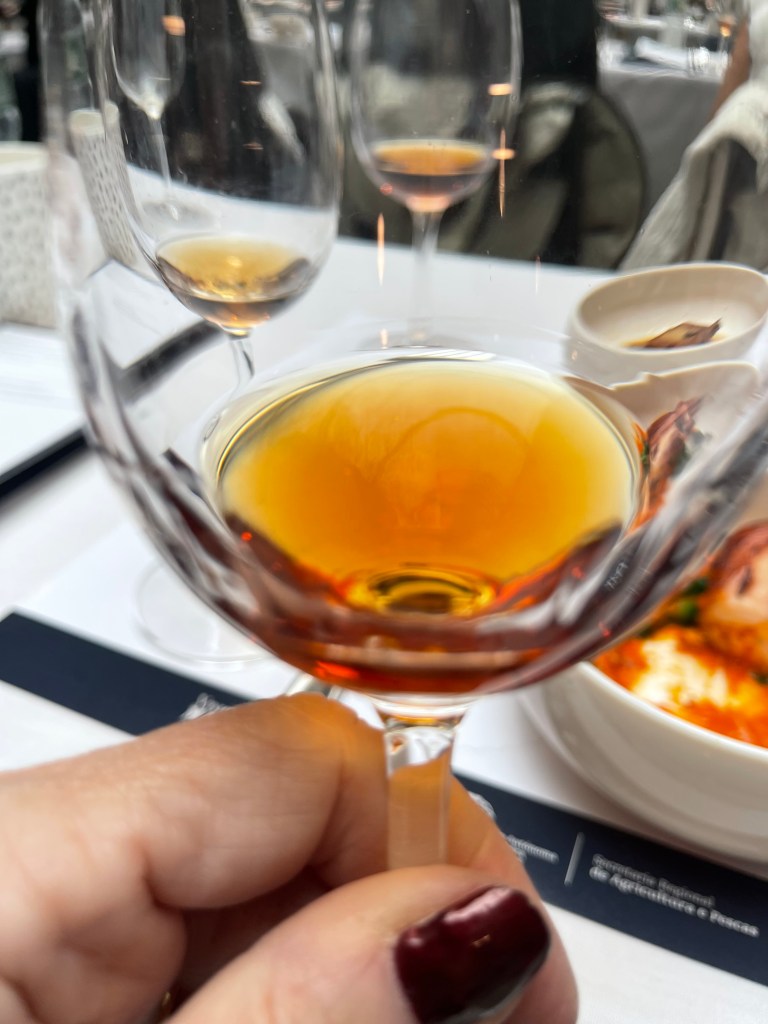
As I jotted down my notes, I appreciated how these two wines had expanded my perception of what constituted a good pairing. In this case I’d have opted for a dry, fruity red wine with low tannins, or perhaps a coastal white with a hint of salinity on the finish. Nothing wrong with either one; they’re conventional. But the Madeiras disrupted that thought process! In each case, the wine’s subtle sweetness put a spotlight on the delicate flavors of the octopus. And the smokiness of the Barbeito was just lovely with the pepper and paprika sauce. Aha moment duly noted.
Course #2: Potato Pavé with Sheep’s Milk Cheese and Oyster Mushrooms
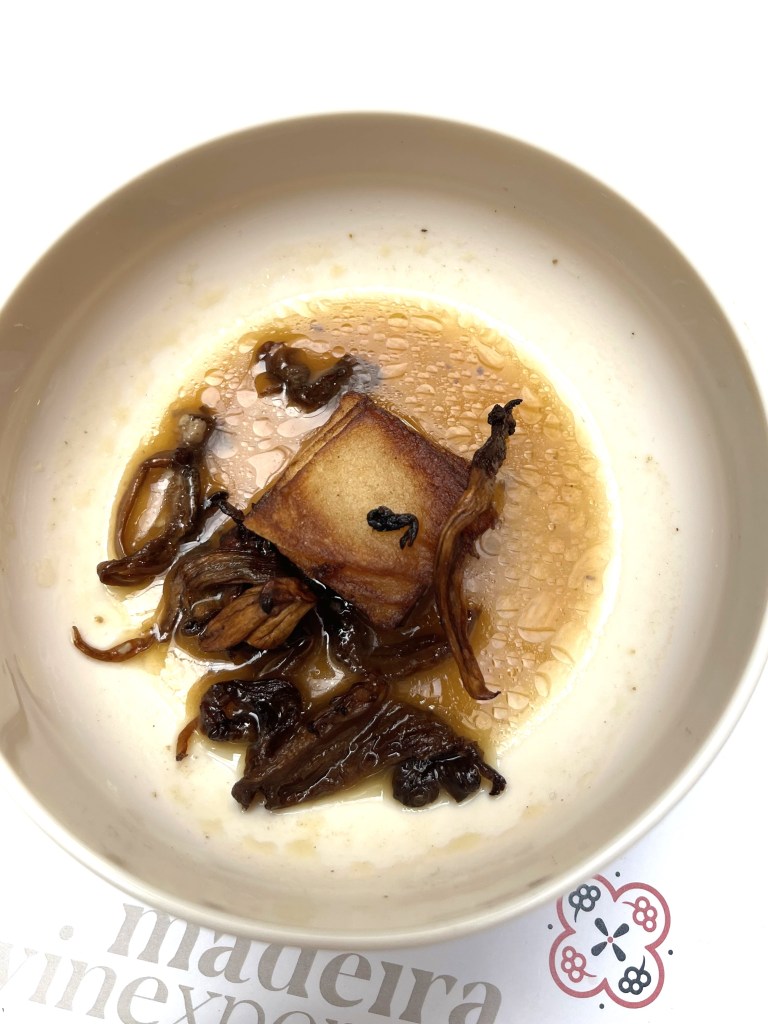
Another beautiful dish, one that probably took lots of skill and time to prepare. It was rich and decadent, with paper-thin slices of potato providing a backdrop to the rich, tangy cheese and the umami-laden mushrooms. Ultimate comfort food.
The Wines: Blandy’s 10-Year-Old Sercial and 1990 Pereira D’Oliveira Sercial

Tasting these two wines side by side is an illumination of Madeira’s ability to evolve as it ages. The Blandy’s, at 10 years of age, was rather delicate with aromas of citrus and spice, flavors of dried lemon and peach. And it was a gorgeous match with the potato pavé, contrasting but not competing with its flavors.
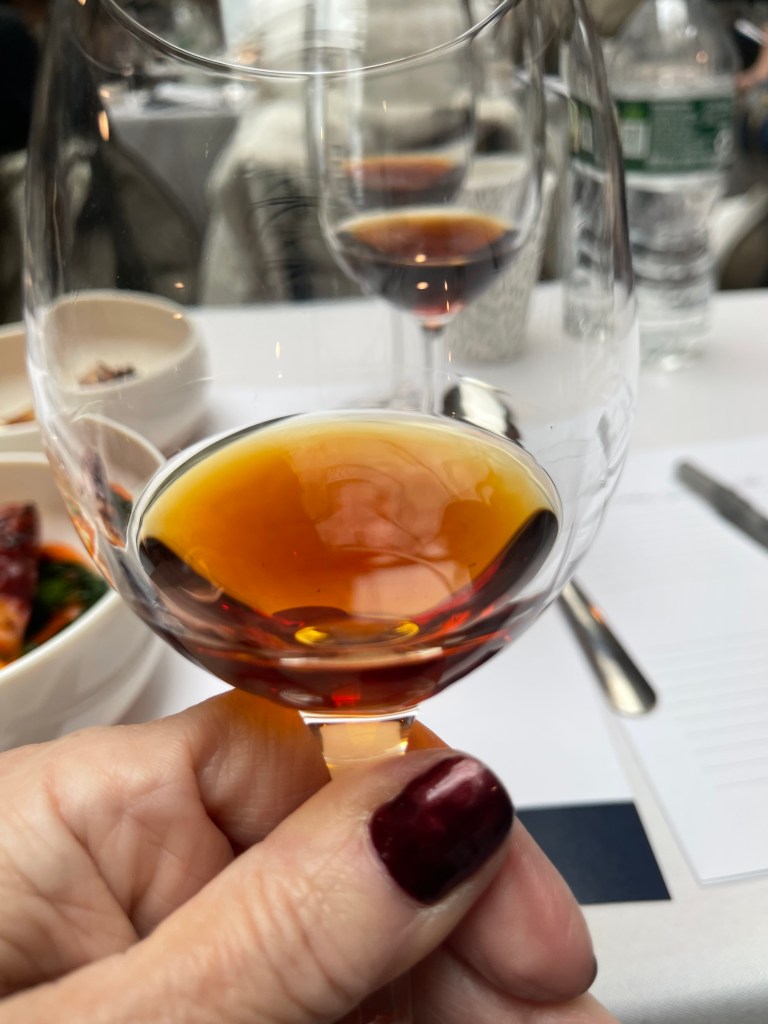
The Pereira D’Oliveira couldn’t have been more different: its deep, chocolate color and cornucopia of dried fruit aromas (fig, date, white currants, orange) were breathtaking. It was as complex on the palate as on the nose, with the sweetness perfectly balancing the (still) high levels of acidity. At 35 years old, this wine tastes youthful – and will continue to improve for decades. (BTW, this was my favorite wine of the entire day.)
Whereas the Blandy’s was prim and proper, an elegant and refined partner to the dish, the D’Oliveira was pure enchantment, love-bombing the senses with abandon and blowing the doors of convention right off their hinges. And they both worked exceedingly well with the dish. How is that even possible? My pairing perceptions shift again . . .
Course #3: Iberico Pork and Clams

I felt like this dish needed a more exciting name, like Mind-Blowing Surf-and-Turf Iberico That Will Change Your Life. Too long to put on a menu, perhaps, but appropriate, nonetheless. You could eat this with a spoon, it’s so tender. And you’d want to, so as not to miss a drop of that broth.
If you’re familiar with Portuguese cuisine, you’re no doubt acquainted with the delicious combination of pork and clams. There’s a reason it’s so popular: the pork’s natural sweetness finds its gustatory soulmate in the briny, umami shellfish. And that’s also why this dish was a brilliant pairing with Madeira. That same sweet and salty interplay is the genesis of its complexity, growing more intense over time.
The Wine: Henriques & Henriques 15-Year-Old Boal

A gorgeous, coppery chocolate color, this wine had aromas of candied walnuts, dried figs and plums, and a hint of sour cherry. The palate offered all of the above plus an attractive peppery sensation that elevated the fruit character. There were savory notes on the finish, leaving a salty, almost meaty sensation. In my opinion, this pairing was another homerun, forcing me (again) to rethink Madeira’s place at the dinner table.
Course #4: Fig Tart

Another dish that needed a fancier name. Deceptively simple-looking at first glance, this tart was a study of textures. I’m convinced that whoever created it is an artist at heart. The crust had a coarse crumb which served as the perfect contrast to the pillows of soft, slightly sweet cream on top. The figs were a tad sweeter but also brought an earthiness that really worked with the crust and the cream. It looked like a painting on the plate.
The Wine: Justino’s 10-Year-Old Madeira Malvasia

Shiny copper color with aromas of dried peach, green Mirabelle plums, preserved lemon, and appealing yeasty notes of baked brioche. On the palate there were flavors of toasted brown sugar, molasses, dried orange peel, as well as more of the brioche character present on the nose. This wine was absolute perfection with the fig tart. Sweet but not too sweet, it accentuated the dessert’s delicate, earthy flavors without overwhelming them. Once again, acidity was key, balancing the sugary flavors and refreshing the palate.
Why Madeira Belongs at the Table – And Not Just for Dessert
It all boils down to balance: sweetness, which can quickly numb your palate to other flavors and textures, needs a counterweight, especially when pairing wine and food. As we learned in this tasting, sweet wines with a high level of acidity can be wonderful with savory dishes.
Take the renowned wines of Sauternes, for example: while all of them have high levels of residual sugar and are demonstrably sweet, they retain high acidity as well, increasing their range at the table. I did an experiment a few years back in which I paired sweet wines from Bordeaux with savory dishes. Spoiler alert: they’re brilliant together!
Perhaps it’s time for a follow-up study featuring Madeira wines? After experiencing the food and wine combinations in this seminar, I’m itching to get started!
Stay tuned for my final post on the Madeira Wine Experience. It features a competition in which NYC’s top bartenders went toe-to-toe in the quest to make the perfect Madeira-based cocktail.
 The Swirling Dervish
Fantastic notes, especially “…love-bombing the senses with abandon and blowing the doors of convention right off their hinges.” What a night you had with the devine food-Madeira pairings. I hope you get to make a trip to the island. We did and cannot recommend it enough. Not only all the Madeira and visiting producers, exploring the island … pretty incredible place!
LikeLike
[…] Part 2: Madeira’s Versatility at the Table Featuring Food and Wine Pairings […]
LikeLike