
I stepped out of the 59th Street subway station, holding onto my hat and pulling my raincoat closer. The cold wind at my back pushed me northward, as the furious rain pelted me from all directions. It was, to paraphrase W.C. Fields, weather fit for neither man nor beast.
Luckily, I didn’t need to go far: Ristorante Il Postino, my destination, was just two blocks away. One foot in the door and I already felt better. The friendly staff offered a warm welcome, taking my coat and ushering me into the quiet, elegant dining room.
I was there to meet Luigi Collavini, head of sales for Eugenio Collavini Viticoltori, and Susan Balasny-Davis, their U.S. Brand Director. I was eager to learn more about the family’s history of winemaking in Friuli, Italy, and to taste a few of their wines.

It all started in 1896, when Eugenio Collavini established a winery in Rivignano, where he cultivated relationships with wealthy families in nearby Udine. His son Giovanni eventually took the reins, managing and growing the business through two world wars. But it was his grandson, Manlio, who made the enterprise what it is today:
- He moved the headquarters to its current location in Corno di Rosazzo, in the Friulian hills where the terroir is more suitable for making high-quality wines.
- He pioneered the production of Pinot Grigio as a white wine rather than a coppery-pink wine, as was the local tradition, bottling it in a clear bottle to showcase its bright yellow color.
- He created the first sparkling Ribolla Gialla wine in the late 1970s, adapting the Martinotti or Charmat method by using horizontal, pressurized tanks and maturing the wine for at least 30 months (a process now called the Collavini Method).
- He envisioned an international market for his wines, one inspired by the large number of Italian immigrants now bringing their influence to the United States and elsewhere.
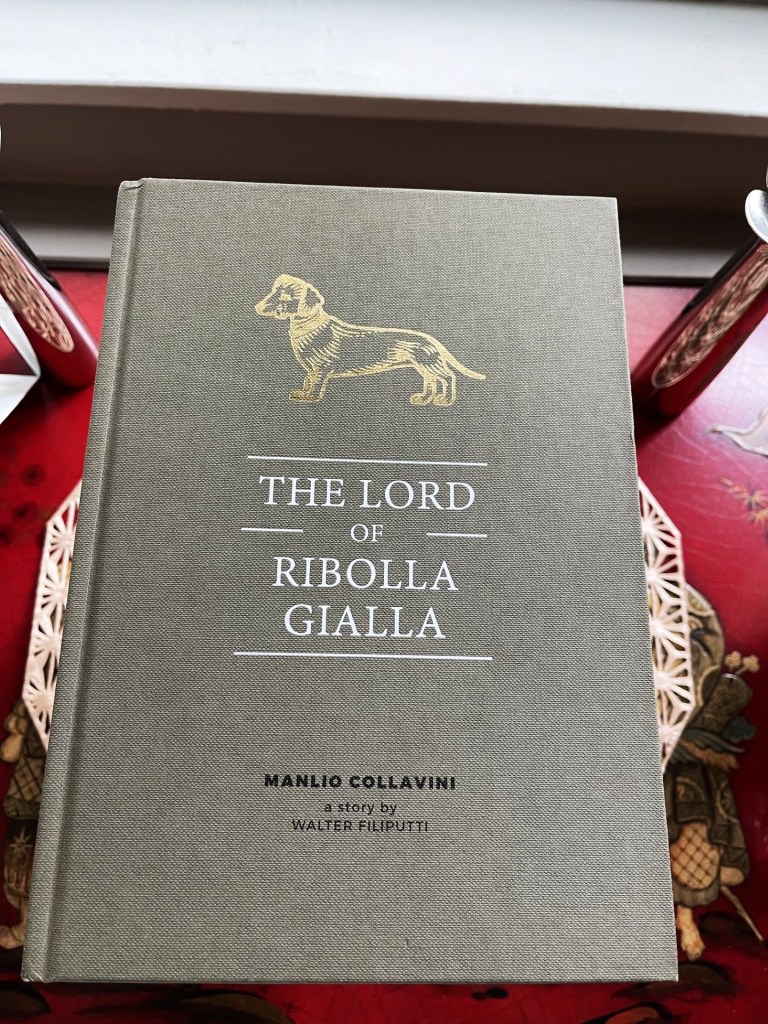
Famous sommelier and author Walter Filiputti dubbed Manlio the “Lord of Ribolla Gialla” in his book of the same name, which recounts Manlio’s remarkable accomplishments. In 1971 Filiputti was Head Sommelier of a famous New York City restaurant, where French wines dominated the list. He believed that Manlio’s focus on developing the international market via strong public relations and communications efforts was responsible for changing that.
Tasting the Wines
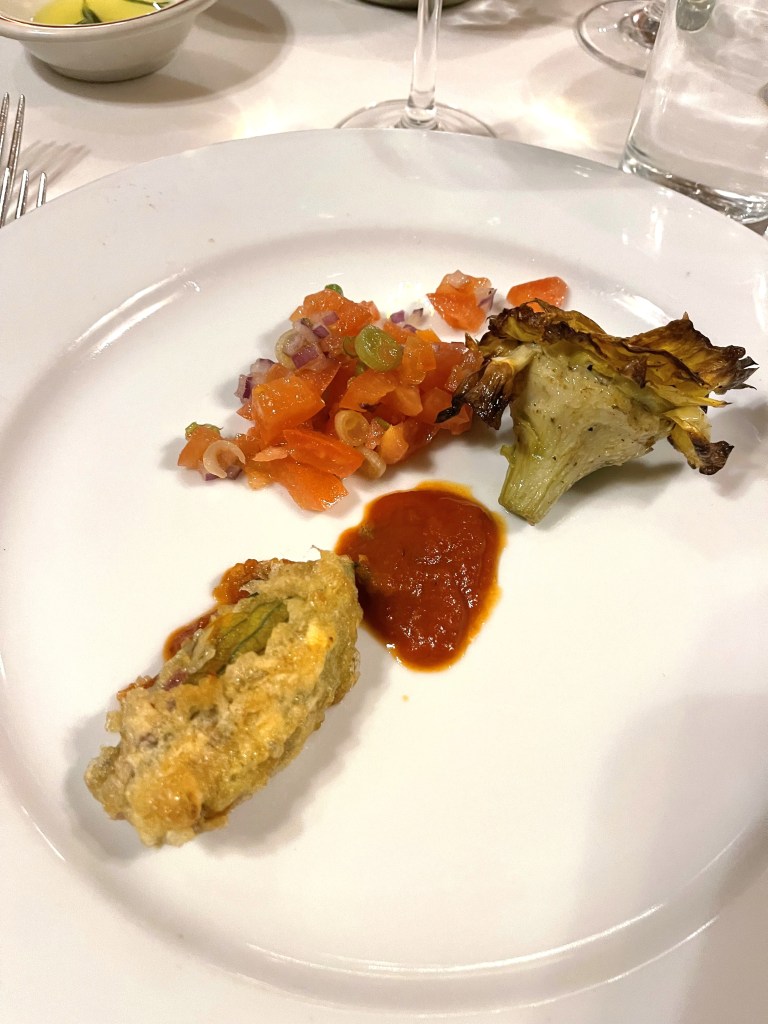

Chef/Owner Luigi Rosso of Il Postino created a lovely lunch to showcase the Collavini wines we tasted. I started with Carciofi alla Giudia (crispy artichokes), followed by a fresh fillet of turbot, each of which showcased the wines nicely:
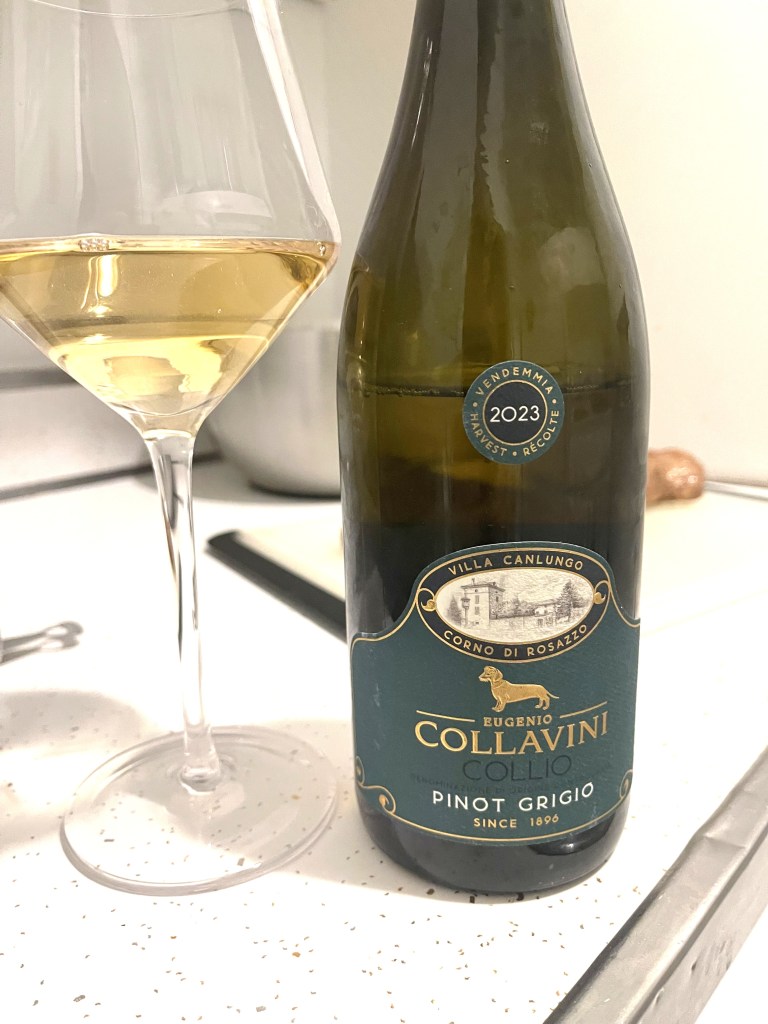
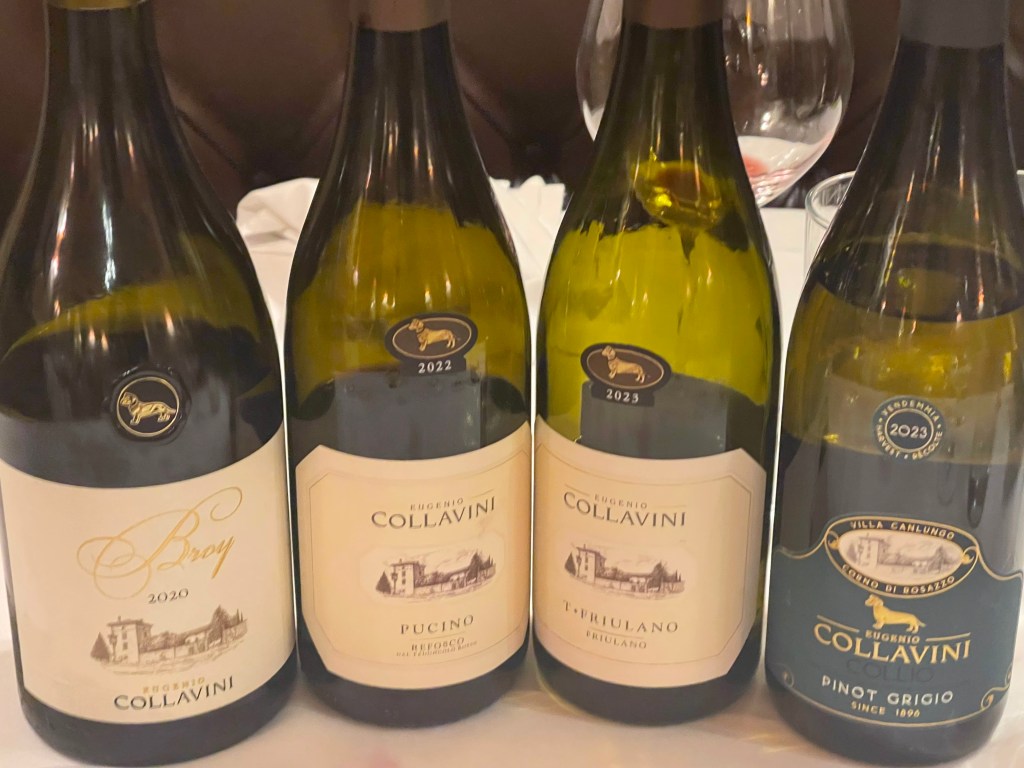
2023 Villa Canlungo Collio Pinot Grigio DOC
Pale lemon color with sparks of copper; aromas of white flower, lemon peel, and green apple. On the palate, notes of apple and pear, grapefruit, and lemon. High acidity, with a savory, mineral-toned finish. Wonderful with the artichoke and its sauce.

2020 Broy Collio DOC
A unique wine, one whose aromas captivated me immediately! A blend of Friulano (50%), Chardonnay (30%), and Sauvignon Blanc (20%), in which the Friulano and Chardonnay grapes are partially air-dried to concentrate their flavors. The Sauvignon Blanc is pressed separately after a brief maceration on the skins to preserve freshness and varietal character. All three are then blended and fermented in stainless steel vats, where the wine ages on its fine lees until spring of the second year after harvest.
I had a moment with this wine, okay? The nose was so complex: tropical fruit, a mélange of citrus, blossoms, honey, and a slight herbaceous note (from the Sauvignon, no doubt.) The palate was just as complex, with a rich texture and a rather full body balanced by tangy acidity. Absolutely lovely with my grilled swordfish, this would also make a great accompaniment to aged cheeses, creamy risotto, or anything decorated with white truffles.
My favorite among the wines I tasted, the Broy has won the Tre Bicchieri award multiple times. No surprise there!

2023 T-Friulano Collio DOC
Luigi explained that this wine represents the local culture of Friuli. The “T” in the name references the grape’s former name, Tokay, which may now be used only for the famous dessert wines of Hungary. Fermentation and maturation occurred in stainless steel to preserve varietal character.
Pale lemon color, with bright floral aromas, crushed almonds, yellow pear, and lemon peel. The palate reflects the nose, with a stronger almond note on the finish. Very nice for spring, I’d pair it with roast chicken, a vegetable salad, or sole amandine.

2022 Pucino Refosco dal Peduncolo Rosso Friuli-Venezia-Giulia DOC
The sole red wine I tasted, this one intrigued me: based on the red-stemmed grape that dates to Roman times, it was bright ruby in color, with pretty violet flashes at the rim. On the nose I got berry compote, fresh strawberry, tomato leaf; after opening for an hour, there were distinct notes of black pepper and licorice. The palate showed structural balance, with a nice interplay of red and black fruit flavors, some savory notes, and dried herbs. A very approachable wine, one which would pair well with a host of dishes.
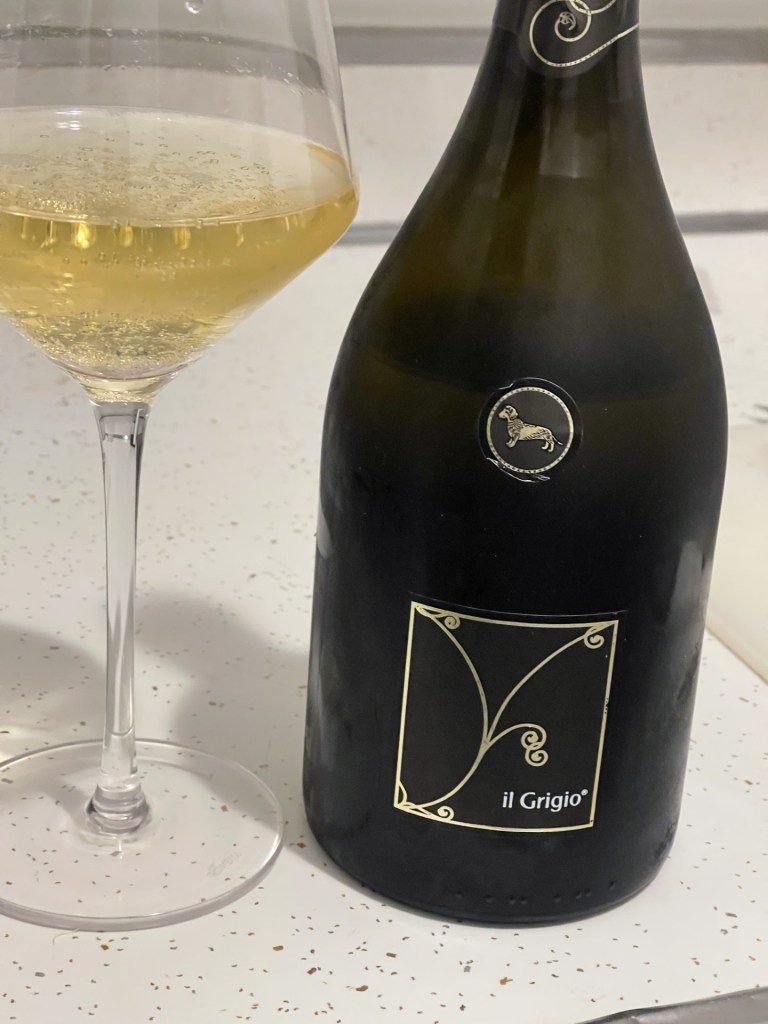
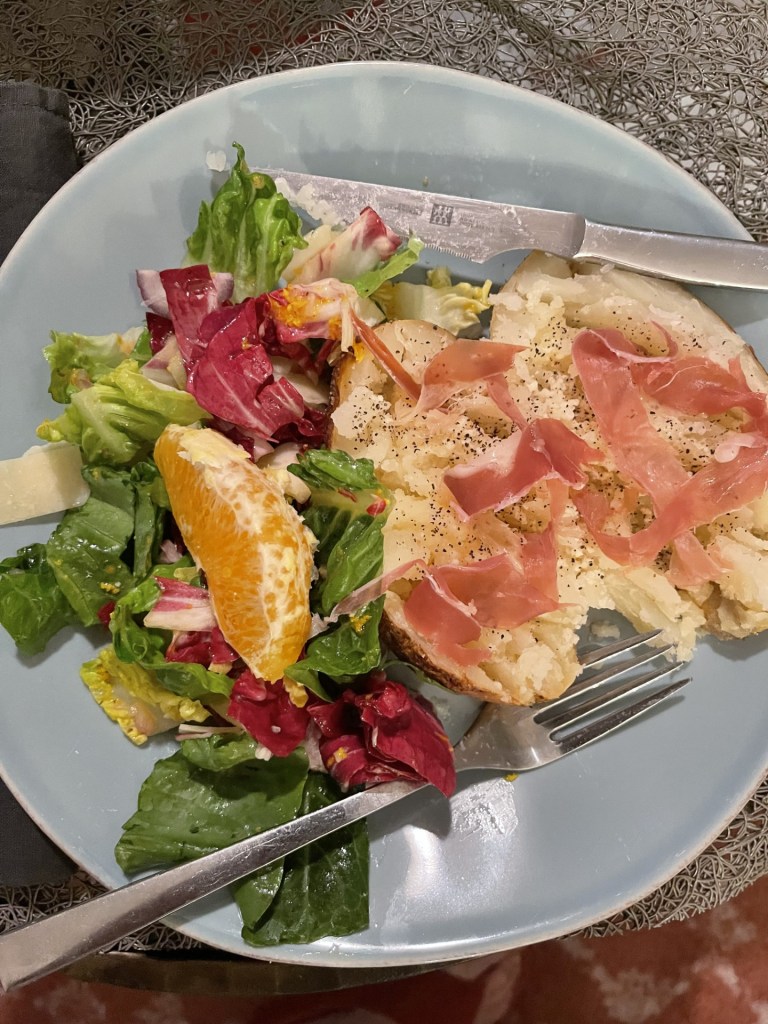
NV Il Grigio Spumante di Qualità Brut
I tried this wine at home, paired with a tricolore salad dressed in a red wine vinaigrette. It was superb! Collavini calls this their “boat wine,” as it’s perfect for a warm-weather celebration with friends.
Il Grigio was Collavini’s first sparkling wine (1973) and it’s made the same way today as it was then: a blend of Chardonnay and Pinot Grigio with the second fermentation taking place in tanks. Somewhat rare for a wine made via the Martinotti Method, this wine rests for six months on its lees before bottling, getting an additional three months of bottle aging before release.
My husband and I pretended it was summer, and enjoyed this pairing on an unseasonably cold, rainy evening. It cheered us right up! Il Grigio is a joyful wine, with plenty of summery citrus aromas (Sicilian orange, Florida grapefruit), ripe golden apples, and brioche on the nose. The palate is bright and fresh, with flavors of citrus fruit, apple pie, and dried orange peel. Much more complex than I was expecting, this bubbly delight was a pleasure to drink; I’d happily do so again.
It paired beautifully with our salad but would go equally well with fried seafood, grilled fish, or mild cheeses.

What’s Ahead for the Collavini Family?
Luigi shared that his father will soon step aside as the winery’s head of operations, allowing him and his brother Giovanni to take over. The 2026 vintage will be their first without Manlio, and they don’t anticipate major changes to the formula that has worked so well for so long. But they will consider new options, both in the vineyard and the cellar.
The brothers will continue to match grape varieties to the best soils: Chardonnay and Sauvignon Blanc to calcareous soils; Friulano on the plots of “ponca” terroir which gives structure to the wines. He also spoke of planting Malvasia on alluvial, acidic soils, as they do in Croatia to great effect. In the cellar, they plan to experiment with five new types of wood, for their barrique-aged wines, and to install a new pneumatic press.
I, for one, am excited to see (and taste) the results. And to experience the next era of Collavini’s history.
Note: Collavini Wines are distributed in the USA by Worldwide Libations, Lyndhurst, NJ.
 The Swirling Dervish
[…] had the opportunity to taste this wine along with several others from the winery, at lunch with Luigi Collavini last month. While each wine was delicious, there was something about the Broy that stuck with me, […]
LikeLiked by 1 person