Don’t worry, Bianchello del Metauro was a new one for me, too! It lies in the northern part of Le Marche, where Saturday’s race will finish. You’ll find all the details on the DOC below. But first, a recap of the action in Stage 7.
Jonas Vingegaard demonstrated his GC dominance in a major flex, climbing the Blockhaus in record time. Felix Gall separated himself from the other hopefuls with an inspiring second-place finish. Here are the highlights:
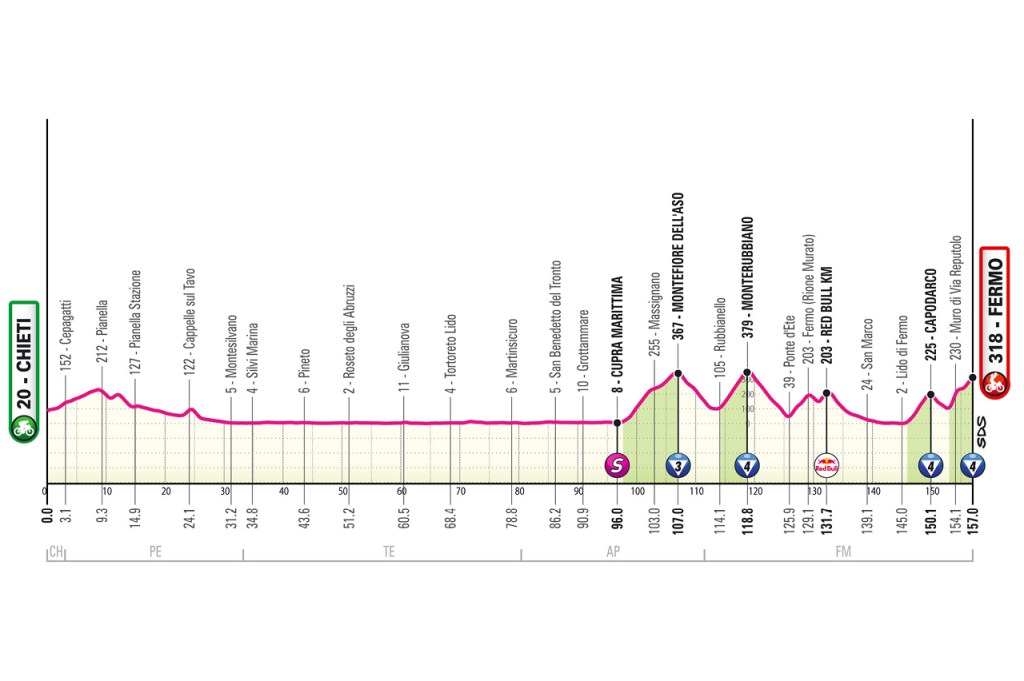
Chieti to Fermo; 156 km; flat for the first half, four climbs toward the end.
We begin the day in Abruzzo and pedal north along the Adriatic Sea to Fermo, which lies in the region of Le Marche. The route is as flat as a pancake for the first 100 kms; then there are four categorized climbs in a row. Not huge ones, but they’ll hurt after the long, mountain stage Friday. I think it’s a day for the breakaway, a group that will probably include most of the sprinters: the sprint points will be awarded just before the first climb.
Here’s the profile map of the stage:
About Bianchello del Metauro DOC (thanks to Italian Wine Central!)
The DOC was established in 1969, recognizing 114 hectares of vines in Le Marche. Annual production is just under 100,00 cases. Biancame (Bianchello in local dialect) stars in the white wines here, where it must be at least 95% of the blend. Malvasia may comprise no more than five percent. Wines must be at least 11.5% abv. For spumante wines, the same guidelines apply, and the wines may be brut or extra dry. Superiore wines must attain at least 12.5% abv.
Passito-style wines must observe the same blending rules and, after harvest, grapes must be dried to achieve a minimum potential alcohol level of 21%. Pressing can be done between November 1 in the year of harvest and March 31 in the year following harvest. It must be aged at least one year, with the earliest release date December 1 of the year after harvest.
About Fattoria Villa Ligi
The Tonelli family has grown grapes since 1912, when their vines were interspersed between rows of wheat. In 1964, they built a state-of-the-art winery, with an eye toward estate-bottling their production. While growing their business, they also worked to protect native grape varieties in their home region of Le Marche. Francesco Tonelli, grandson of the founder, has taken things one step further by helping to create the Pergola DOC and co-authoring an in-depth history of viticulture in Le Marche. Today, the winery is managed by his son Stefano and his wife, Léa Pailloncy, who have been at the helm since 2014.
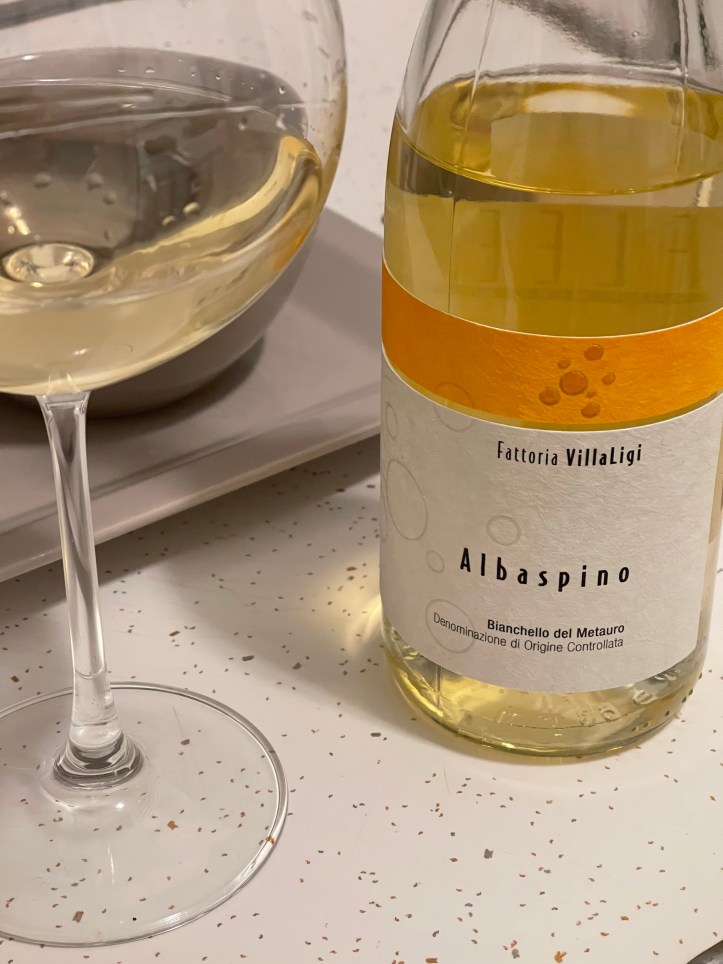
2024 Villa Ligi Bianchello del Metauro Albaspino ($20; 13% abv)
This wine is made from 100% Biancame (just two hectares!), a local, small-berries clone of Trebbiano closely related to the Procanico grape of Orvieto. Grapes are hand-harvested, and fermented in concrete tanks. The wine then undergoes regular batonnage and is bottled in the spring following harvest.
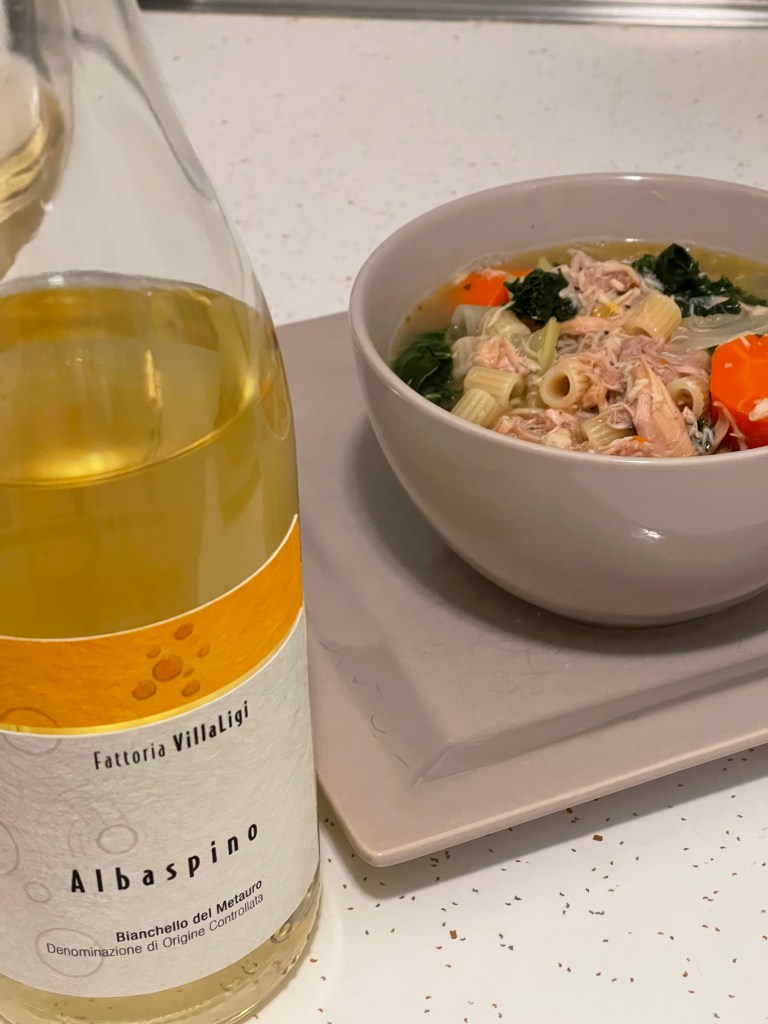
Pale lemon color, almost clear at the rim. On the nose there are aromas of citrus, yellow apple, white peach, and a hint of fresh basil. A sip reveals orange, Meyer lemon, and grapefruit, as well as some sweet herbal notes and fresh garden peas. Moderate acidity and length. This light-bodied, fresh wine is nicely balanced and would be a great choice for simply cooked fresh fish, pasta with pesto, or a citrus salad with mixed greens. It went nicely with homemade chicken soup, although I’m already looking forward to pairing it with summer specialties. Stock up!
Enjoy the race and Italy’s Adriatic coast. See you tomorrow with a preview and wine recommendation for Stage 9!

