As a wine lover I’m a sucker for a good story, especially when it’s multigenerational and community-oriented, with a transcontinental twist. Recently I found myself listening to just such a story as Nicolò Miyakawa of La Bulichella in Tuscany recounted his family’s journey into winemaking.
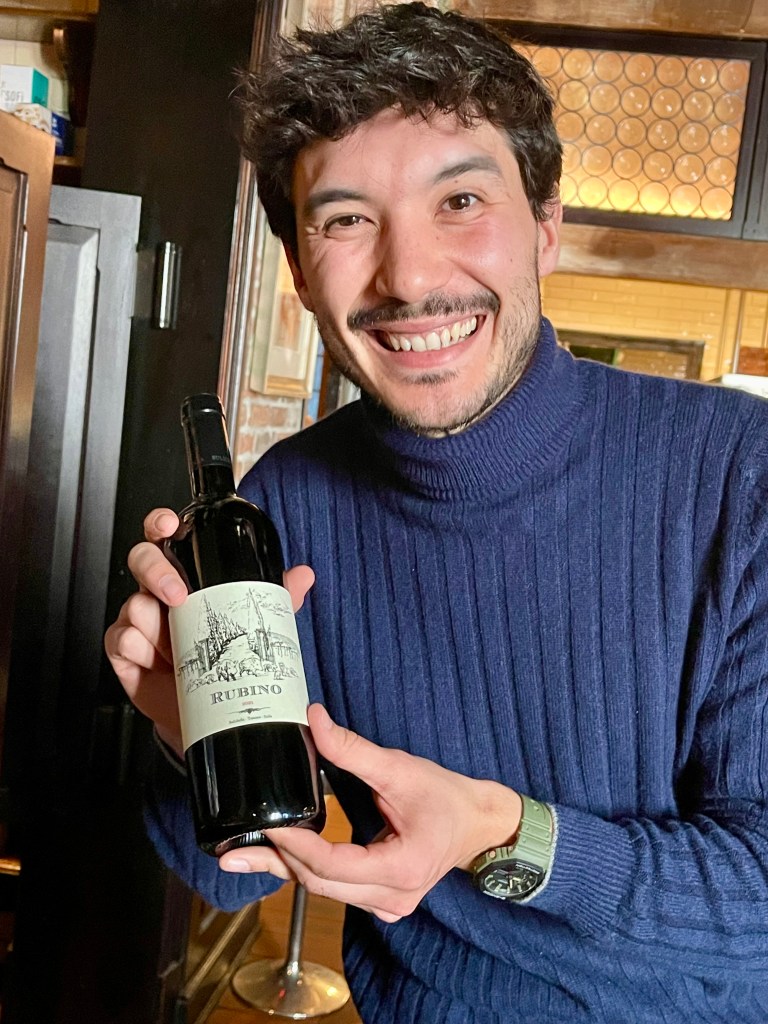
It started with his grandfather, Hideyuki, who traveled from Japan to Rome via motorcycle in the 1960s; a trip that included jaunts through India, Pakistan, and Iran. While in Rome, Hideyuki fell in love with his future wife, Marisa Bassano. In 1983, they partnered with three other families to establish Azienda Agricola Bulichella in the Val di Cornia region of coastal Tuscany. While organic farming was the primary goal, Bulichella simultaneously forged strong ties with the local community, offering social support to neighbors in need.

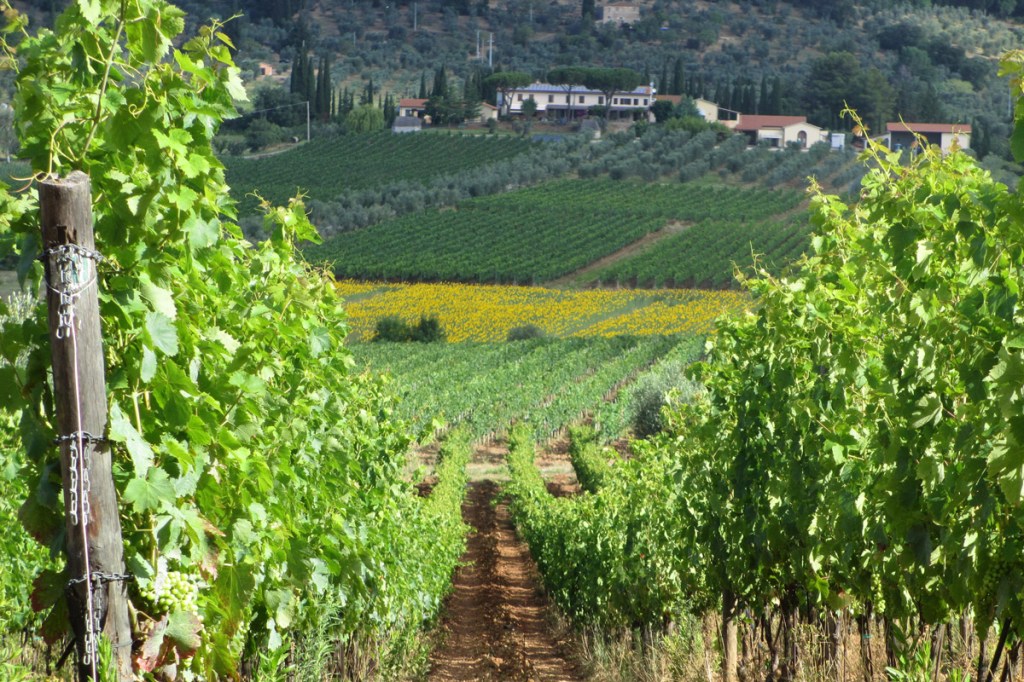
By 1999, Hideyuki and Marisa had become the sole proprietors, expanding their vision to include the production of organic wine and olive oil. They also opened their property to agritourism, hoping to attract visitors eager to slow down and absorb the peace and quiet of the countryside. Today the property comprises 42 hectares, 17 of which are vineyards, 10, olive groves. Visitors to the farm enjoy trips to local beaches as well as treks in the nearby mountains.
Even as they grew their business the couple stayed true to their commitment to helping others, near and far. Marisa was instrumental in founding Un Sorriso Per Tutti (A Smile for Everyone) a charity that supports a Congolese orphanage. Its goal is to “protect, improve and make life more beautiful, vigorous, and joyous for those in greatest need,” and still operates today.
Suvereto DOCG
The town of Suvereto, which dates to the 11th century, lies north of Maremma, near the Tuscan coast. Its vineyards lie adjacent to those of Bolgheri, where Bordeaux varieties were blended with Sangiovese and other local grapes to make the first Super Tuscan wines. The entire region lies atop an alluvial plain created by the confluence of the Cornia, Milia, and Massera Rivers. From a distance, it resembles a huge amphitheater opening westward, to the sea.
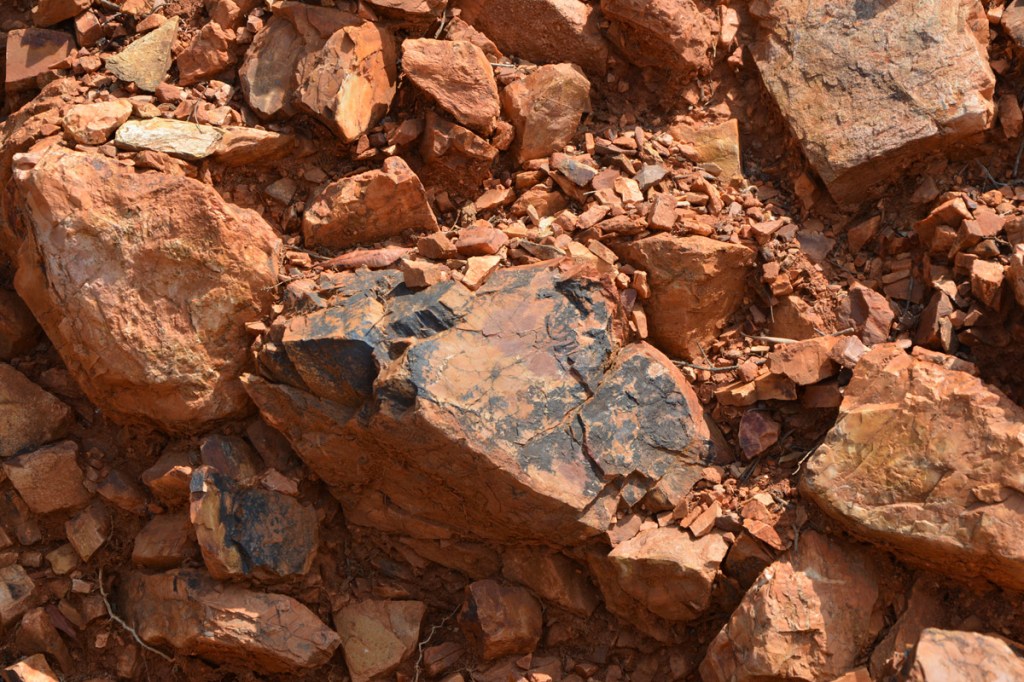
Soils in Suvereto are varied and complex: large clumps of red clay mingle with schist and sand, and the uniquely gorgeous mineral rocks from the fabled Metalliferous Hills, where chunks of colored marble peek through the red, ferrous topsoil.
Long, hot summers are moderated by the nearby Tyrrhenian Sea and the northerly Mistral wind, allowing the grapes to achieve full phenolic ripeness without losing acidity or structural balance.
As President of the Val di Cornia DOC Consorzio, Hideyuki Miyakawa was instrumental in the establishment of the Suvereto DOCG, which was approved in 2012. As the Consorzio’s website indicates, the goal was to “combine expertise and human biodiversity, building an identity made of lands, hands, and wine.” Today the Consorzio boasts nearly 30 producers, all of whom work collaboratively to improve viticulture, viniculture, and a healthy local economy.
Lunch with Nicolò Miyakawa and Rachele Micheli
Last month Slow Wine Italy came to New York City, and I had the opportunity to sit down with Nicolò, grandson of Hideyuki and Marisa, and Rachele, who manages cellar operations at Bulichella. What a treat that was!

Over plates of Locanda Verde’s famous ravioli, we talked about Bulichella’s history and winemaking philosophy, as well as the challenges and opportunities that lie ahead. And, of course, we shared a bottle of the winery’s Rubino, a fresh and delicious blend of Sangiovese, Merlot, and Cabernet Sauvignon. (Tasting notes to follow!)
I asked about the impact of climate change on their work, an issue that’s top of mind for growers in most regions these days. Nicolò stressed that the biggest factor was the “compression of time.” When you grow multiple varieties in multiple locations with differing aspects and exposures, he explained, maturity is something to watch closely. That entails harvesting as soon as grapes ripen, meaning multiple passes through each plot to ensure that bunches are picked at just the right moment. It reminded me of the painstaking work done in Sauternes, where meticulous observation of ripening and the desired level of botrytis development is critical to reaping a healthy crop and making a quality wine.
Rachele commented that this puts extra stress on the cellar team, as grapes are processed as soon as they are picked. The result is a lengthy cycle of picking, crushing, and fermenting that leaves the cellar workers with “more work to do, with less time to do it.” Nicolò chimed in, “Once it starts, it doesn’t stop until the last grapes have been picked.” Phew!
On a positive note, they agreed that some varieties – namely Petit Verdot and Syrah – are faring better in warmer terroirs; that they may indeed be the best hedges against climate change going forward. Petit Verdot is already an important component in Bulichella’s Montecristo and Coldipietrerosse red blends. Perhaps it will play a more significant role in the future. Syrah, which also thrives in hotter climates, is used to make a varietal rosé and a red.
(Also in their favor: the aforementioned maritime influence and Mistral winds, which cool the vineyards and impart a notable freshness to the wines. The Sangiovese in particular, has a crisp salinity on the palate – a nice balance to the ripe fruit character.)
Speaking of Rosé . . .
When I expressed (a lot) of interest in the Syrah-based rosé, Nicolò was quick to add that Rachele is “a genius” at making their Sol Sera, which is 100% Syrah. He called her the “Color Master,” praising her dedication to achieving the optimal extraction of color and aromas from the grapes – a delicate balance if ever there was one. For this wine, that involves using a gravity press to gently crush the fruit, and constantly assessing the quality of the “flower must” or first juice. Only after Rachele is satisfied with the quality does fermentation take place: in a blend of stainless-steel tanks, amphorae, and barriques. Now my curiosity was really piqued! I look forward to tasting this lovely-sounding wine one day as I do have a soft spot for Syrah, in all its forms.
Tasting the Wines
I tasted each of the wines below, either at lunch or at the Slow Wine USA event:
2021 Rubino (Costa Toscana Rosso IGT)
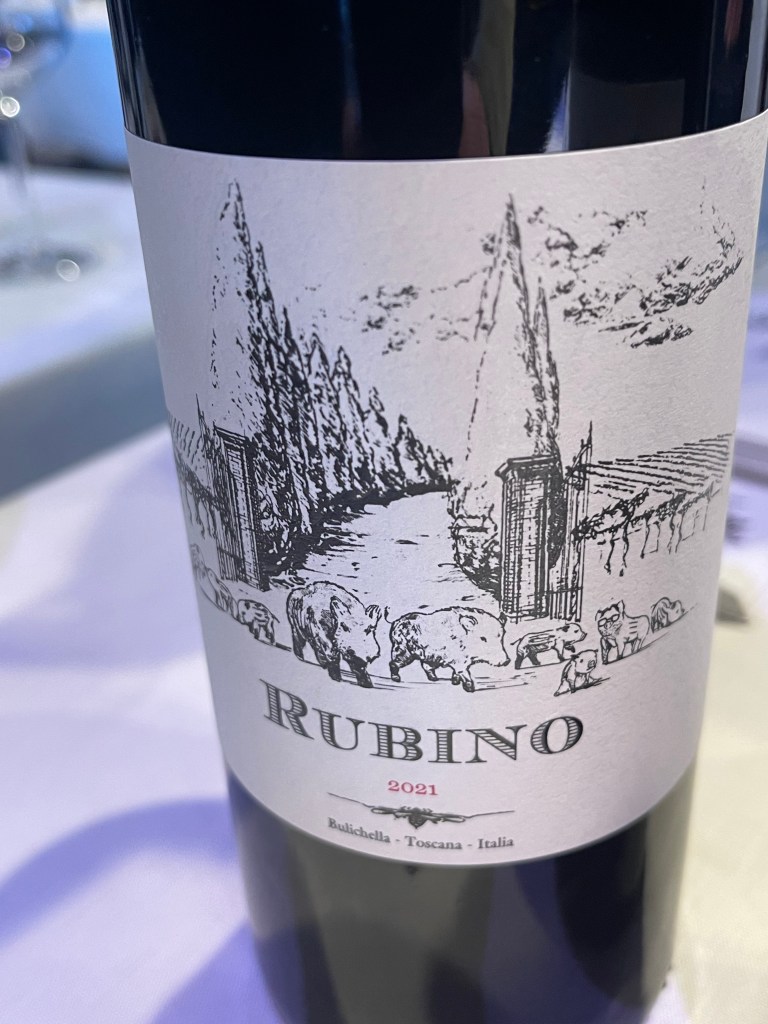
Bulichella’s standard bearer, this wine is a blend of Sangiovese, Merlot, and Cabernet Sauvignon. Nicolò pointed out the label illustration, which features two adult wild boars with seven babies, seeming to enjoy themselves in the vineyard. He explained two reasons for the illustration: wild boars are common in Suvereto and indeed enjoy the vineyards. Also, the adult animals represent his grandparents Hideyuki and Marisa, and the babies are their seven children!
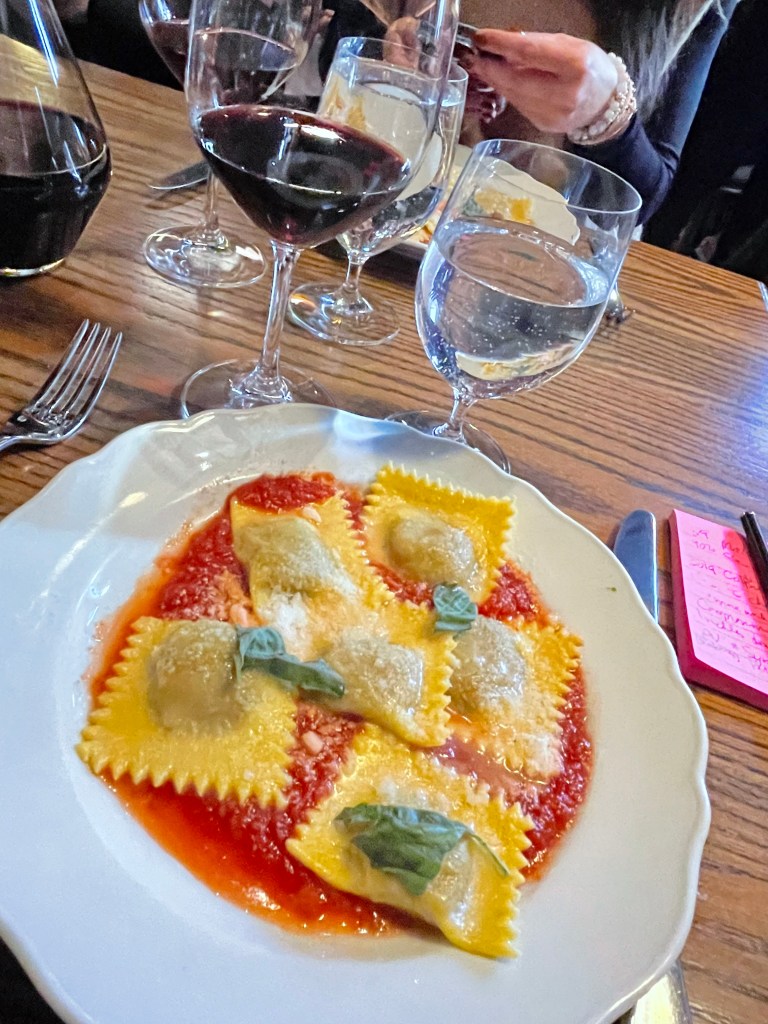
An intense ruby red, this wine has lush red fruit aromas (cherry, plum) and smooth, soft tannins. Crisp acidity and a long finish. Perfect with Locanda Verde’s “My Grandmother’s Ravioli” which was stuffed with spare rib and pork belly.
2019 Coldipietrerosse (Suvereto DOCG)
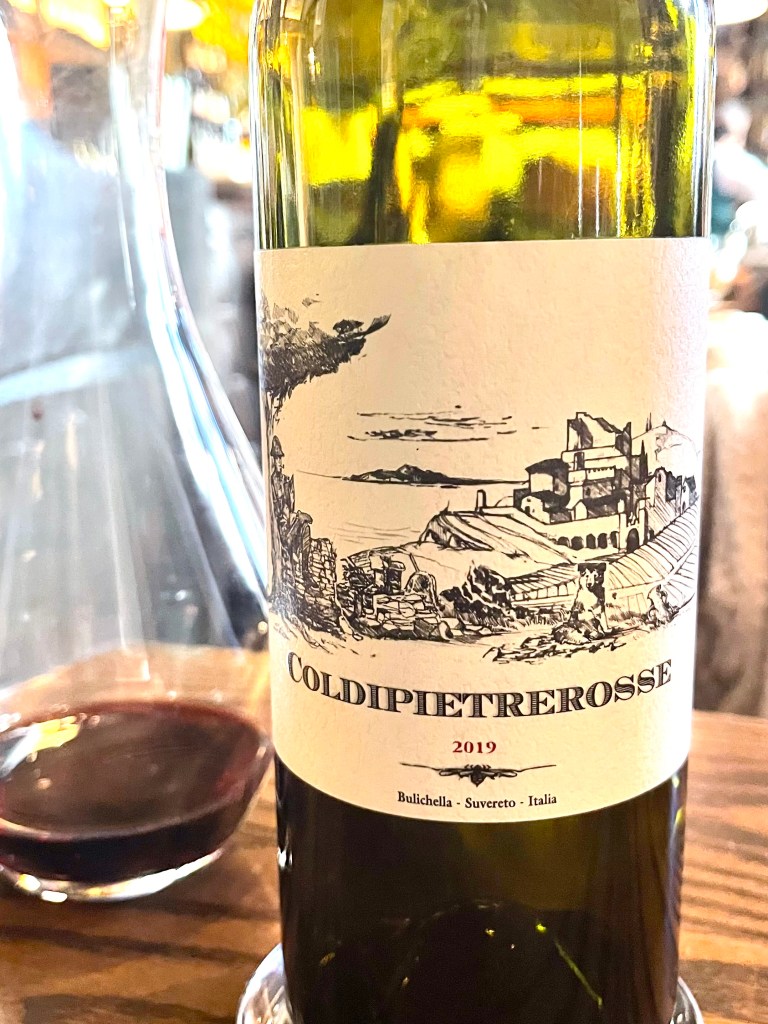
A blend of Cabernet Sauvignon, Merlot, and Petit Verdot, this is a grand wine: deep color, pronounced aromas of black currants, plum, and blackberry with spicy notes of cocoa, tobacco, and vanilla cream. It’s full-bodied with high, velvety tannins, moderately high acidity, and a long, complex finish. Pour this with steak, roasted meat, or wild game.
2019 Hide (Costa Toscana Syrah IGT)
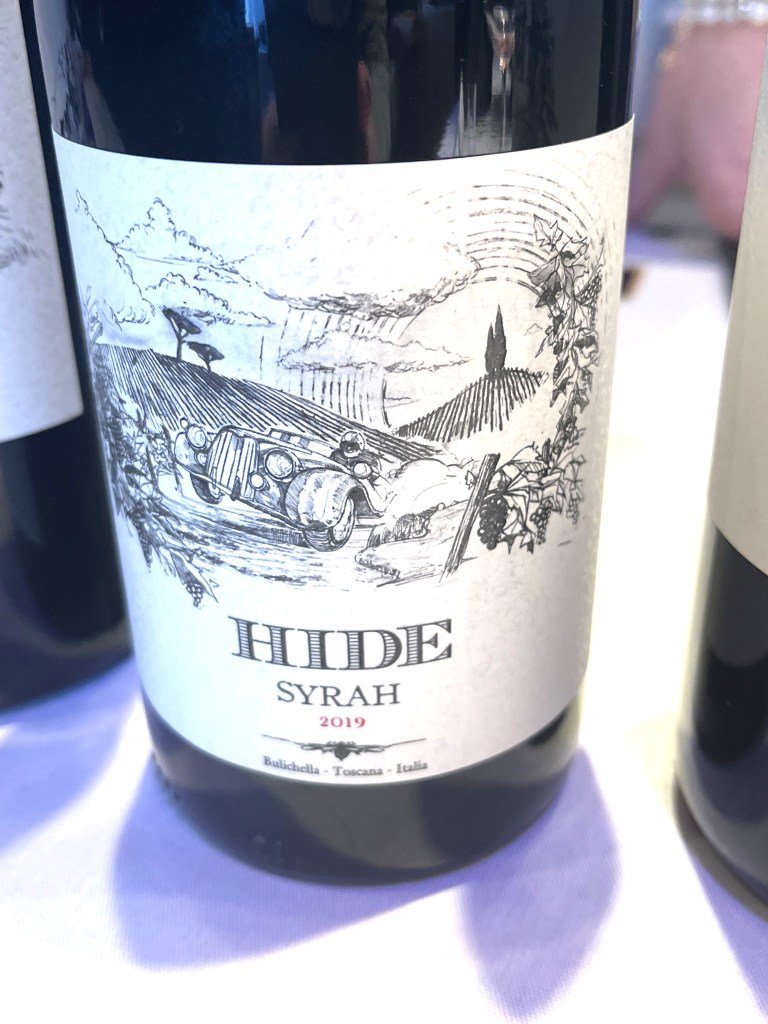
This is textbook Syrah: intense violet-purple color with blackberry and pepper aromas, with spicy fruit-meat-smoke flavors. Full-bodied with high tannins and acidity, this is finely balanced, with a long, complex finish. Set out a platter of smoked meats, aged cheeses, and good bread with this one!
2018 Montecristo (Suvereto DOCG)
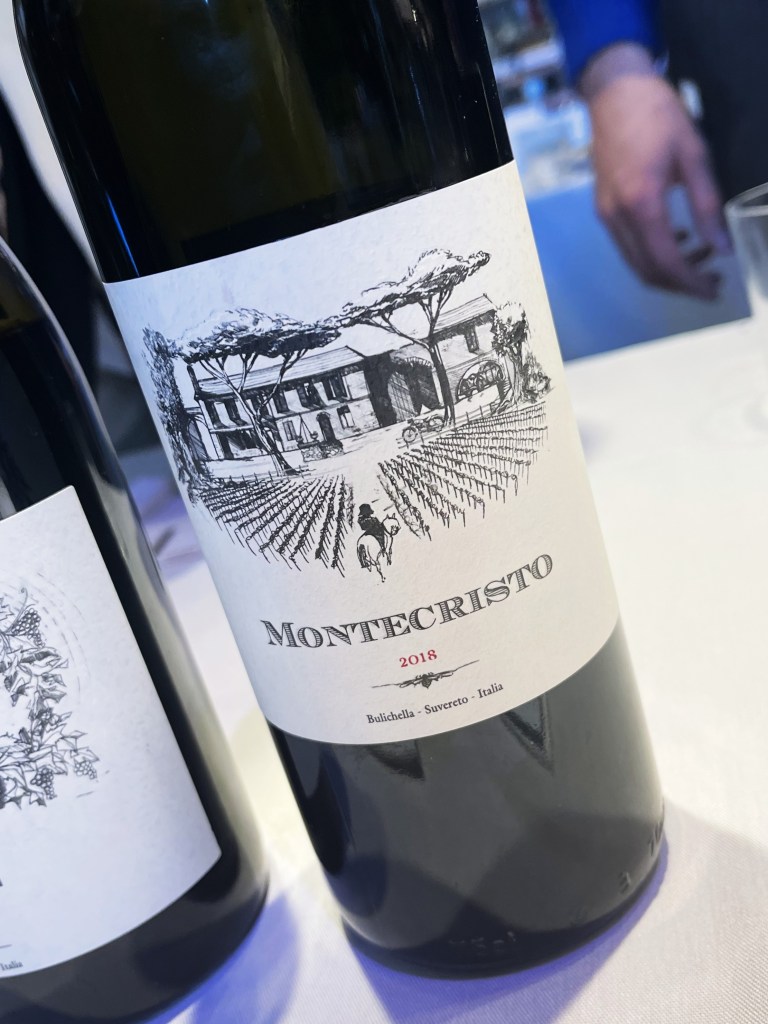
A combo of Cabernet Sauvignon, Merlot, and Petit Verdot from mountain vineyards, this blend has bold, complex aromas of berries, cocoa, and coffee. Flavors reflect the nose, with grippy tannins, tangy acidity, and an intriguing finish. Absolutely delicious! This wine deserves a perfectly grilled Bistecca alla Fiorentina, served rare, with no more embellishment than a sprinkling of salt.
Grazie Mille, Bulichella!
Many thanks to Nicolò, Rachele, Studio Cru, and the folks at Slow Wine for the opportunity to taste these wines, learn their history, and – of course – hear an epic tale of how wine, family, and community come together in the best way.
 The Swirling Dervish