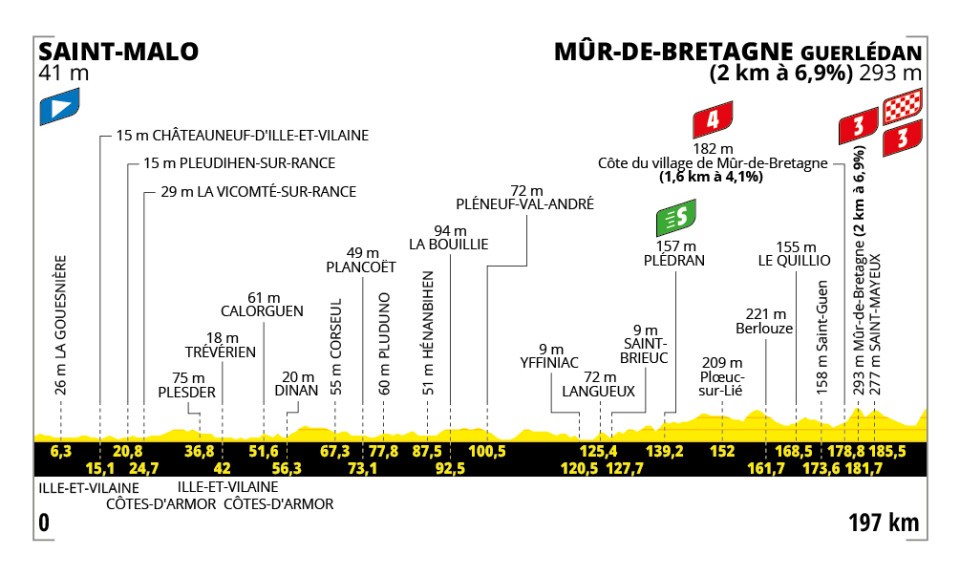
Friday will be another long day for the peloton (197 kms) through the rolling hills of northern France. As with Stage 6, the race’s three categorized climbs are stacked toward the end, just when legs and lungs have begun to tire. It’s anyone’s guess as to who will claim victory: with the mountains of the Massif Central looming ahead, will the GC teams conserve their efforts over the next few days?
In Thursday’s race, Irishman Ben Healy of Team EF Education First outlasted all comers to claim victory on the day. No mean feat considering his company throughout the stage: Mathiu Van Der Poel, Simon Yates, Quinn Simmons, Michael Storer, and Will Barta all hung in there as long as they could, to no avail.
Tadej Pogaçar rallied at the end, in an attempt to keep the yellow jersey on his back for another day. Alas, it was not to be: despite his sprint to the line, he fell one second short, ceding the overall leader’s jersey to Van Der Poel. It seemed to be an exhausting day for everyone, especially with those climbs in the final kilometers.
Hope they’re ready to do it all over again tomorrow!
My First Visit to Bretagne: An Overnight in Paimpol
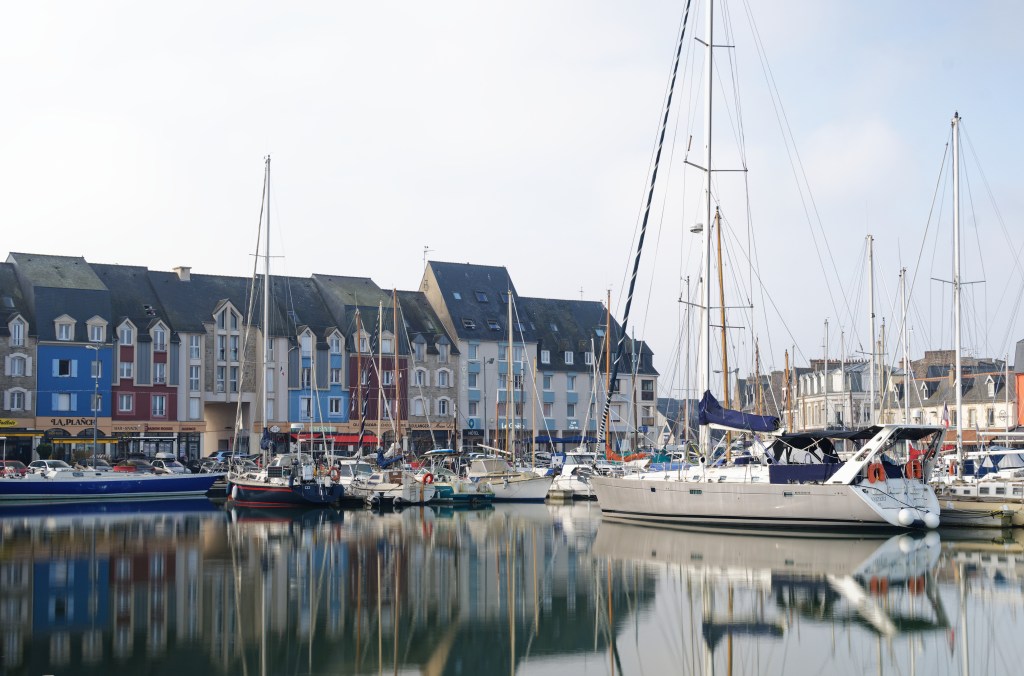
Years ago my ex-husband and I spent two weeks traveling around France, first visiting his family in Paris and then driving to Paimpol to see Pierre, one of his best friends, who lived in an old farmhouse near the coast.
Pierre was an artist, a bit of a rogue with a modern flair. We had a few of his pieces at home and I found them rather whimsical. My favorite was a painting that I referred to as The Salad People because of its almost supernatural vibe: smiling human heads that seemed to be levitating in an atmosphere of I’m-not-sure-what. Weird, yes, but also cool.
I couldn’t wait to meet the man behind the work.
Pierre welcomed us into the kitchen for a glass of wine and some snacks. Then he took us on a tour of the farmhouse, which retained much of its “original charm.” Meaning the floors creaked, the shadows lurked, and the ancient furniture silently reproached us as we entered the living room.
I was convinced I saw a Salad Person perched on the ceiling . . .
But nothing could have prepared me for the guest room (i.e., our accommodation for the weekend.) Pierre mentioned that he had just redecorated it to serve as a kids room for his grandchildren when they visited. As the door opened, I saw a crib, a changing table, and a queen-size bed. All good.

Then Pierre turned on the lights.
I felt like the insipid co-star of a low-budget horror movie, my eyes wide as saucers as I clutched my ex-husband’s arm. On every wall, in practically every empty space, Pierre had hammered (yes, with nails) the heads of 100 dolls – from tiny Barbie crania to life-size noggins the size of a cantaloupe. No bodies, just the heads.
He insisted his grandkids loved it. I insist that those kids have yet to recover.
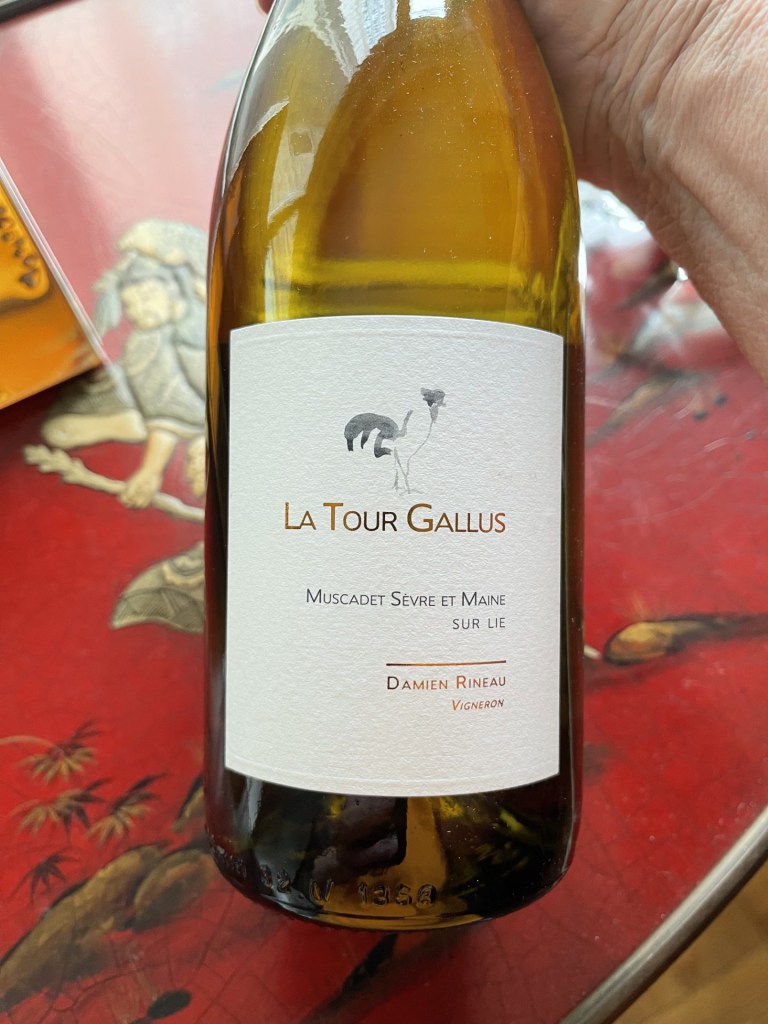
Tour de France By the Glass Recommendation: 2023 Domaine La Tour Gallus Muscadet Sèvre et Maine Sur Lie ($19 retail; 12.5% abv)
My better memories of Bretagne involve relaxing at a waterside café, a platter of freshly shucked oysters in front of me and a glass of Muscadet in hand. What grows together goes together, as wine and food pairing aficionados like to say, and there is no better combo than shellfish and Muscadet. (Note: this wine hails not from Bretagne, but from the Loire Valley, where they also consume vast quantities of oysters.)
Domaine La Tour Gallus
Melon de Bourgogne grapes are grown on a 17-hectare parcel in the village of Gorges that has been farmed by Damien Rineau’s family since 1680. Today viticulture is organic, and the property is certified by HVE and Terra Vitis. In 1997, Damien co-founded Vignerons du Gorgeois, which worked to define the viticultural and winemaking discipline required for Muscadet of a higher classification than existed before. In 2011 his group was successful at convincing the INAO to create the new classification of Cru Communal, and Gorges was among the first three villages to qualify.

Tasting Notes
Pale green-gold with a watery rim. Imagine that you’re enjoying the beach on a brisk spring day. Inhale and you’ll sense the salty freshness of the breeze, a hint of iodine from the seaweed tumbling in the surf. Add a spritz of lemon-lime tang, some green pear, and that’s the nose on this wine. The palate is super-fresh, with high acidity, plentiful citrus character, and just a bit of salty lemon rind on the finish. Pour this wine with your daily catch: striped bass, oysters, or soft-shell crab would do nicely. A bit of advice: buy two bottles, because this one goes down easy!
Thanks for reading; I’ll be back tomorrow with a race update and a new wine for Stage 8.
 The Swirling Dervish
[…] you’re eating locally in Bretagne, please refer to yesterday’s post, which pairs local oysters with a lovely Muscadet from the nearby Loire Valley. For Saturday’s […]
LikeLike