But first, a recap of Stage 10:
The second individual time trial gave Primoz Roglic a much-needed boost, as he made up time on his key rivals. Despite the rainy conditions (and falling in his warm-up ride) he climbed back into fifth place overall. UAE Team Emirates riders Isaac Del Toro and Juan Ayuso are at the top of the leaderboard, which should make for an interesting race on Tuesday. Not to mention that their teammates Adam Yates and Brandon McNulty, are also in the top ten.
Still don’t understand the plan there . . .
Here’s a bit more of what happened:
Stage 11 will be a challenge for everyone:

There are three categorized climbs:
- The first occurs about 75 kms into the race and is a Category 1 with about 14 km of uphill riding. Gradients range from 9% to 19%. Ouch.
- The second arrives at 136 kms and is a Category 2 with 11 kms of climbing with gradients between 5% and 10%.
- The final Category 2 happens at 170 kms into the race and has gradients of 6% to 12%. The descent lasts about 5 kms to the finish line.
- Weather may also be a factor, with cold and rain expected.
I’ll go out on a limb and predict that Primoz Roglic and his Redbull – Bora – Hansgrohe mates will plan an attack on the first climb, hoping to leave his rivals in the dust. As for UAE’s plan, I’ll bear in mind what the team manager said this morning: that “there is no designated leader, the team is the leader.” We’ll see how that works out . . .
While They Pedal, We’ll Be Sipping Lambrusco!
The Lambrusco Grape: Family vs. Variety
The word Lambrusco actually represents an entire family of grapes calling Emilia-Romagna home. (There is some grown in other regions, but the bulk is found in this part of Central Italy.) Under the Lambrusco family crest, four varieties are responsible for the majority of wine made today:

Lambrusco di Sorbara
Perhaps the lightest and most floral of the family, Lambrusco di Sorbara favors the sandy soils around the city of Modena (of the famous balsamic vinegar.) While the most prevalent of the vines, its cultivation can be difficult, as it requires pollination from another Lambrusco variety. Sorbara wines are renowned for their intense aromas of violet (Cab Franc lovers, take note!)
Lambrusco Grasparossa
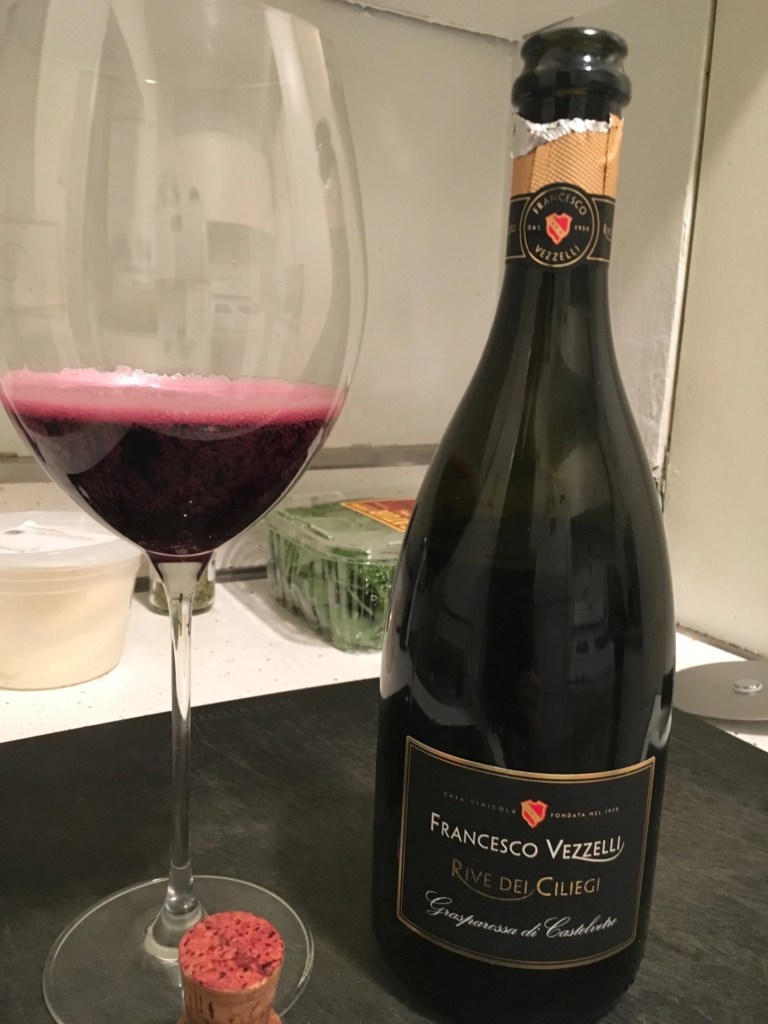
Also known as Lambrusco Castelvetro, for the town where it grows most prevalently, Grasparossa prefers hillside vineyards and clay-based soils. Favorable placement at higher elevations allows this variety to ripen fully even in the coolest years. Wines made from Grasparossa are noticeably more tannic and concentrated than other Lambrusco wines, and many of its fans consider them superior in quality to others. These deeply colored wines, with their heady aromas of black cherry and fuller bodies are perfect accompaniments for robust meat dishes and hearty stews.
Lambrusco Maestri
Plantings of this variety are on the upswing, with acreage under vine doubling in the last ten years. It is a reliable friend to the farmer, due to its hardiness and adaptability, probably big factors in its popularity. Growers far beyond Italy’s shores have experimented with Maestri as well, and it has found a welcoming home in Australia. The wines themselves brim with fruit aromas and flavors and tend to exhibit a creaminess and roundness on the palate. They are easily approachable, if not complex wines, and are meant to be enjoyed young.
Lambrusco Salamino
Named for the sausage-shaped grape bunches it produces, Lambrusco Salamino may be the most aromatic of all the Lambrusco varieties. According to Ian D’Agata, author of Native Wine Grapes of Italy, Salamino wines “combine the grace and fragrance of Lambrusco di Sorbara with the power and body of Lambrusco Grasparossa.” These well-balanced beauties give off effusive aromas of red fruit and violets and have real tannic structure. Many Salamino wines are made in an off-dry or sweet style, which can be quite appealing.
Spectator Sip: Francesco Vezzelli Lambrusco Grasparossa di Castelvetro Rive dei Ciliegi (11% abv; $19)
Nose: Black cherry, violets, and sweet cola.
Palate: Ripe black cherry, strawberry, and cola, with notes of balsamic vinegar on the finish. Minimal tannins, and the acidity is medium-low. It’s a light-bodied wine that’s quite enjoyable to drink.
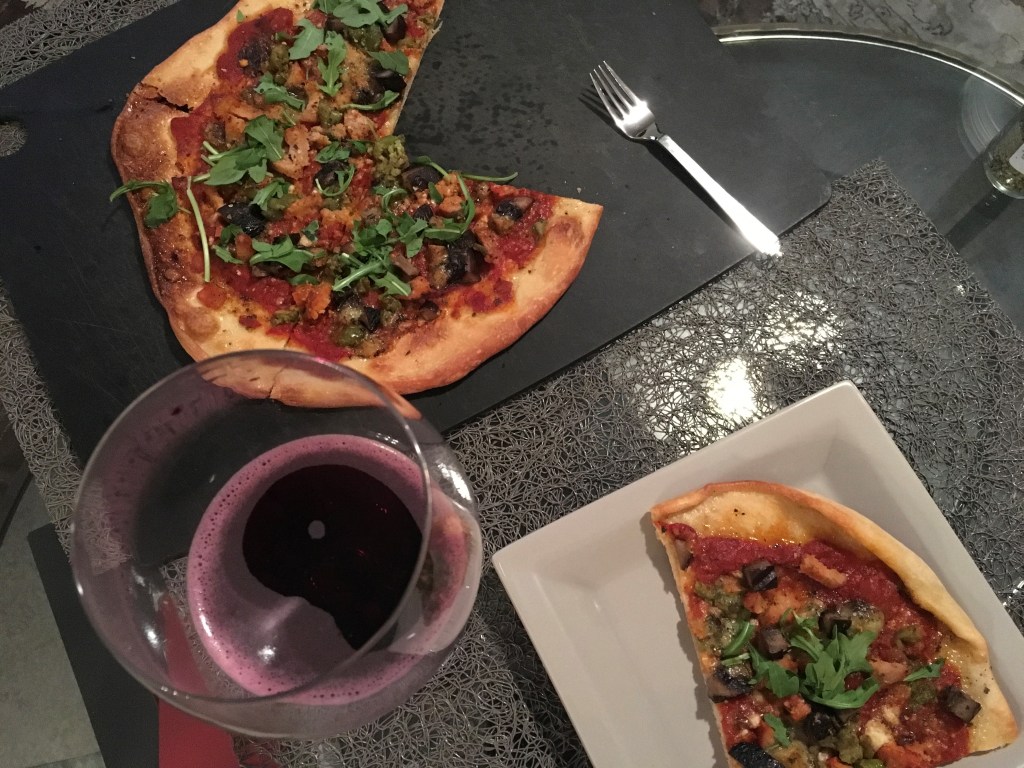
Pairing: Homemade pizza (using whatever I had in the fridge!) Can’t imagine a more enjoyable combo than this pizza and Lambrusco. Absolutely on-fire delicious!
I’ll be back tomorrow with info about Thursday’s race and my recommended wine pairing!
 The Swirling Dervish